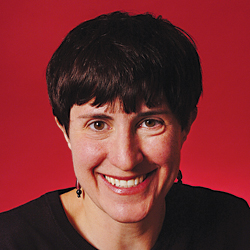
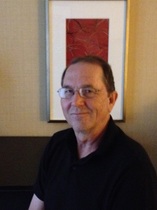
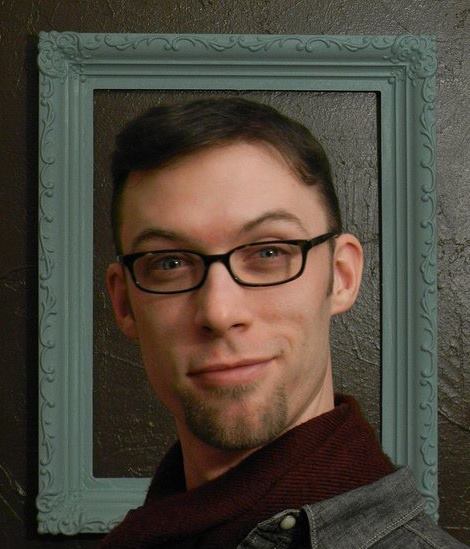
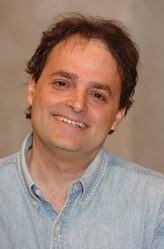
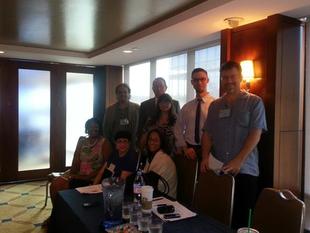
 This past Sunday, I presented on a panel entitled: Staging Strife and Solidarity: Black-Jewish Relations in American Drama. While I'm no stranger to panel discussion, this was my very first Association of Theatre in Higher Education (ATHE) panel. We had a small, but attentive audience, and by attentive, I mean wrapped! Personally, I'm a sucker for a panel of smart, talented, passionate theatre artists, scholars, students and historians. If you are too, then you would have loved it. The amazing Faedra Chatard Carpenter (Assistant Professor, University of Maryland) conceived and organized this panel. She enlisted the help of Drew Barker and LaRonika Thomas both Doctoral Candidates at the University of Maryland. In addition to myself, the panelists included James M. SoRelle (Professor of History, Baylor University), Heather S. Nathans (Professor of Theatre, University of Maryland), Ari Roth (Artistic Director, Theater J), Kwame Kwei-Armah (Artistic Director, Centerstage), and Gavin Witt (Associate Artistic Director, CenterStage). Unfortunately, Kwame wasn't able to join owing to bad weather in Chicago. However, he was with us in spirit and that was wonderful! The idea for the panel came together as Faedra and Drew were serving as dramaturgs on Washington D.C.'s Theater J and Baltimore, Maryland's Centerstage respective productions of THE WHIPPING MAN. If you haven't seen it, here's a brief synopsis from the lovely folks at Theater J: In Richmond, Virginia in the chaotic aftermath of the bloody Civil War, two newly-freed slaves and the son of their former master -- a Jewish Confederate soldier -- reunite to celebrate on Passover. As the three men gather in the burnt remains of the Confederate soldier's family home on the eve of a new chapter in the country's history, they uncover a web of dangerous secrets from the past that threaten to destroy their bond. This provocative play, called "haunting, striking and powerful" by The New York Times, examines what it really means to be free. Both theaters collaborated on dramaturgy and outreach efforts. Faedra was also dramaturging the new play development workshop and reading of my play, The Hampton Years. It struck her that a great deal of synergy was happening around the Black and Jewish relationship and that it should be harnessed and examined. The panel was organized in a roundtable that offered a “constellation” of three major topics or sections: Section #1: Historicizing public presentations of Black-Jewish Relations (“the way back past” as well as the recent past), which featured Heather Nathans and James SoRelle, and was moderated by Faedra Chatard Carpenter.
Prior to the conference, Faedra posed a number of questions to our historians to help "set the stage" for our conversation. She wanted them to provide us with anecdotes, facts, references, and/or statistics about past "public presentations" of Black-Jewish relations that occurred before the 1990s. Faedra defined "public presentations" as anything that could be seen as "performed or presented" for a consuming public. For instance, advertisements that depict runaway slaves or Jewish people; editorials written describing character traits and qualities of Blacks and Jewish people; legislative acts regulating the civil rights of Blacks and Jewish people (Jim Crow statutes and Nuremberg laws, but also the Civil Rights Act of 1964), monologues or plays (Heather mentioned an instance where William Shakespeare's "I am a Jew. Hath not a Jew eyes? Hath not a Jew hands..." shifted to "I am a Negro. Hath not a Negro eyes? Hath not a Negro hands..." in a reference to the shared history of oppression), protests or demonstrations (most notably the civil rights movement), and happenings. Blacks and Jewish people have shared a long history. The common ground on which we stand is one of great strife. African-American Jewish scholar, Julius Lester, captures our experience: 1. We were enslaved. 2. We were demonized and denigrated by the white majority. 3. We were forced from our homelands and dispersed across the world, now living in a diaspora 4. We were forced to live in segregation and ghettoization. 5. We faced political injustice and discrimination against our civil rights. 6. We faced violent attacks and torture in the form of pogroms, race riots and lynchings. The Black and Jewish relationship, is deep and complex. We have danced, prayed, and wept together. We have marched arm-in-arm demanding equality, justice, and civil rights. We have fought against one another, standing at arm’s length in hatred, mistrust, and confusion. Our ability to dramatize both the strife and solidarity experiences on the stage offers audiences room to witness, interrogate, celebrate and heal from our many experiences. The act of dramatizing the Black and Jewish relationship was the topic for the next section. Section #2: Contemporary plays that animate Black-Jewish relations, which featured Jacqueline Lawton and Ari Roth, and was moderated by LaRonika Thomas.
First, I spoke about the inspiration for and development of THE HAMPTON YEARS, which was originally conceived in November of 2010 after a conversation with Shirley Serotsky, Theater J's Director of Literary and Public Programs. 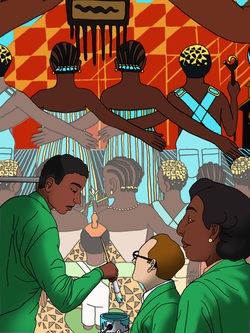 Set at Hampton University from 1939 to 1946, THE HAMPTON YEARS examines the impact of World War II on Jewish immigrants living in the United States and their role in shaping the lives and careers of African American students in the segregated south. Viktor Lowenfeld joined the Hampton Institute in Virginia in 1939 as assistant professor of Industrial Arts and studio art teacher. Burgeoning artists, John Biggers and Samella Lewis. were his students and acclaimed artists, Elizabeth Catlett and Charles White, taught in residence. While certainly a difficult time for both Blacks and Jewish people as Jim Crow laws and Anti-Semitism plagued the country, somehow these passionate and brilliant artists rose above all that was standing in their way to create beautiful, poignant, and lasting works of art. THE HAMPTON YEARS celebrates the legacy of these outstanding artists and honors the stewardship of their great work. I shared the following scene, playing Samella to the amazing Gavin Witt's Viktor: Spring 1944. Art Studio Classroom. Viktor and Samella discuss her sculpture and sketches. VIKTOR Are these your only sketches? Where are your kinesthetic drawings? SAMELLA Doc, the scribbles aren’t my thing. I’m not a baby. I was at Dillard for two years. I have training. VIKTOR Yes, but you’re too visual, Samella. SAMELLA Doc, just because I’m a Negro doesn’t mean I’m haptic. I paint what I see. VIKTOR Put race aside for a moment, we cannot rely on the eyes alone. Look at this piece of crystal. What can you tell about the texture based on what you see? SAMELLA It’s brittle. Hard, but it can also be delicate. VIKTOR What about the surface? SAMELLA It’s clear. Transparent. VIKTOR Good. Of course, the color can change based on the light. Crystal ranges from dark to bright to warm to bleak. Light draws an inconsistent conclusion. What does that tell us? SAMELLA We must rely on the other senses. VIKTOR Yes, the creative experience is an integrated experience. SAMELLA But I live in a segregated world, Doc. That’s got nothing to do with me. (Beat.) Look, you said we could make whatever we wanted. Well, all I want to do is sculpt a mother and child. I think it will be beautiful. VIKTOR It’s not enough to create something just because it is beautiful. You must put yourself into each sketch, painting, mural, sculpture. What drew you to the subject? SAMELLA I saw a woman holding her baby and she seemed happy. I just wanted to capture that happiness. VIKTOR Is this a happiness that you’re missing in your own life? SAMELLA What? (Beat.) Doc, I’ve gone to the park every day for a week. I’ve drawn a hundred sketches of women with babies. I've talked to them. VIKTOR But when is the last time you held a baby in your arms? Or rocked a crying, feverish baby to sleep? SAMELLA I don’t know. VIKTOR Then how you are ever to create a mother and a child? (Beat.) Here, put on this blindfold. Samella covers her eyes with the blindfold. VIKTOR We have Johann Gottfried Herder to thank for this exercise. He believed that touch was the most important sense. I tested this theory in my work with blind students. From them, I learned that touch transcends the visual. By relying on touch, you create what you feel. Literally. Think about the mother and child that you saw. What made you stay with her? Perhaps you miss your own mother. Samella removes the blindfold from her eyes. SAMELLA This is nonsense. VIKTOR Put the blindfold back on. Why must you fight me at every turn? SAMELLA Because of your assumptions about me! Who are to tell me that I have no happiness in my life? Or that I miss my mother. Maybe I just want to create this sculpture, because it’ll be beautiful. Doc, you criticize artists who paint flowers and landscapes, but to someone who’s never seen a mountain before or the ocean that painting means something to them. Why isn’t beauty enough? VIKTOR But what you’re describing is more than just beauty. You want to define a viewer’s first experience. Why? What was it about the flower or mountain that moved you to paint it? SAMELLA Oh, this is so frustrating! VIKTOR What was it about that mother and child that made you want to spend hours recreating them? SAMELLA They both seemed loved. The mother seemed so completely filled with love. I’ve never felt that. VIKTOR Good. That’s it. That is why you must create this sculpture. SAMELLA But if you cover my eyes, I won’t know what it will look like. VIKTOR Trust yourself. First, sculpt how it feels first. Then worry about how it looks. Samella sighs deeply. She covers her eyes with the blindfold and starts to sculpt the clay. End of scene. 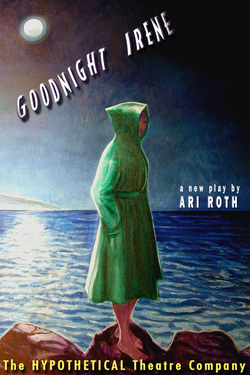 Next, Ari Roth spoke about the inspiration, impact and production history of GOODNIGHT IRENE. Click here to read more about the play and his experience at the conference. He also read in the role of Ethan to the fearless and ever-talented Faedra Chatard Carpenter's Anna Deavere Smith. Here's part of the excerpt he shared: ANNA Integration, for me, is a nostalgic term. ETHAN 'Kay, here's the thing. For me? I miss nostalgia. I mean, compared with the reality – the very harsh – and I think we can make a case, in terms of climate, that we have actually gone backwards. Worse than backwards. Because we are annoyed now. Exasperated, in a way we never were in the '60s. I mean, I can remember my Dad going on all those marches; y’know, not in the South, but Woodlawn. Cicero. Got a brick thrown at him once. Didn't hit 'im. Hit a kid. But we went to the funeral. We went to a lot of funerals, actually. ANNA Really? ETHAN Also meetings. He'd talk. Me 'n my sister, we'd, y'know, wander out front, play Pinners. I'd play; she'd whatever, y'know, not important. Cry. Is it getting unbearably HOT, or is that just–? ANNA Y'know, maybe next time, Ethan, I can interview you, because you have what seems to me a virtually bottomless reservoir of guilt which I find absolutely— ETHAN (Overlapping "fascinating") Wait— ANNA For example, I'd like to ask you about Moving. Which you mention several times. ETHAN “Stayed.” I believe I said “stayed.” South Side. ANNA Which means what? A “bad” neighborhood? ETHAN (With pride) Thirty years, same house. ANNA And why? ...Would you stay? Or your father. Why would anyone choose to stay... in a bad neighborhood? (Memory voices) ...Ethan...? (He is transfixed) I have to go change now. ETHAN No, wait... One more — See, 'cause I recently commissioned this professor; this crazy black-Jewish -- you've heard of him — Julius Lester — on the subject of, what else — and he argues that this “Golden Age;” this “Alliance;” “Simpatico,” is “Largely myth and denial founded on wishful thinking and mutual piggy-backs” and, see, I'm gonna print it, but I have no idea if I even believe it! ANNA I see. Well, I find I'm much more drawn to people who don't have a thesis. Who are struggling to deal with a thesis; to overcome a very personal thesis— ETHAN (Hopeful) Yes? ANNA So, for instance, “Simpatico? Was it real?” I don't know the answer! I don't care about the answer! But the asking; your need to, is for me very... ETHAN Yes, but-- ANNA You see, Ethan, in the struggle to make a point, we often become the point, which is much more the point, than the point that we thought were making. ETHAN ...Huh? ANNA (As she exits) Bye now! It's exciting to know that THE HAMPTON YEARS will join the canon of plays dramatizing the Black and Jewish relationship. Here are a few others well worth the reading: Parade – Jason Robert Brown and Alfred Uhry The Day the Bronx Died by Michael Henry Brown Sarah and The Sax by Lewis John Carlino Soul Sisters by Joanne B. Koch & Sarah Blacher Cohen Medal of Honor Rag by Tom Cole I'm Not Rappaport by Herb Gardner The Left Hand Singing by Barbara Lebow Caroline, Or Change – Tony Kushner I Am a Man by OyamO No Niggers, No Jews, No Dogs by John Henry Redwood The South Side: Racial Transformation of an American Neighborhood by Louis Rosen Fires in the Mirror byAnna Deavere Smith Driving Miss Daisy by Alfred Uhry And of course, The Whipping Man by Matthew Lopez, which brought us together and closed our afternoon together. Section #3: Issues of Audience and Advocacy, (Community outreach and audience response, particularly in reference to the Theater J and Center Stage productions of THE WHIPPING MAN), which featured Ari Roth and Gavin Witt, and was moderated by Drew Barker.
This was a riveting conversation. We got to the heart of what compelled each artistic director to produce THE WHIPPING MAN by Mario Lopez, which in addition to being the most produced show across the nation of the 2011-2012 season and possibly of 2012-2013, also won the 2011 John Gassner Playwriting Award by the NY Outer Critics Circle. Outside of it being a one set, three person play, THE WHIPPING MAN appeals to our love affair with history; our obsession with ritual and religion; our fascination with the events leading up to, surrounding, and following Lincoln's assassination; and our shock/horror at the realization the Jewish people owned slaves. Of the two productions, I was only able to see Theater J's production, which was directed by Jennifer L. Nelson and featured Mark Hairston, Alexander Strain and David Emerson Toney, and was truly outstanding.
Prior to the panel, Drew asked Ari and Gavin the following question, but we didn't have a chance to answer it: How do institutions and artists negotiate between sincere attempts at “bridge-building” and creating productive “multicultural” explorations without falling into the potential traps of audience pandering or cliché? So, I would like to pose it to all of you now. Please send me your thoughts and I'll post them here!
0 Comments
Your comment will be posted after it is approved.
Leave a Reply. |
My Blog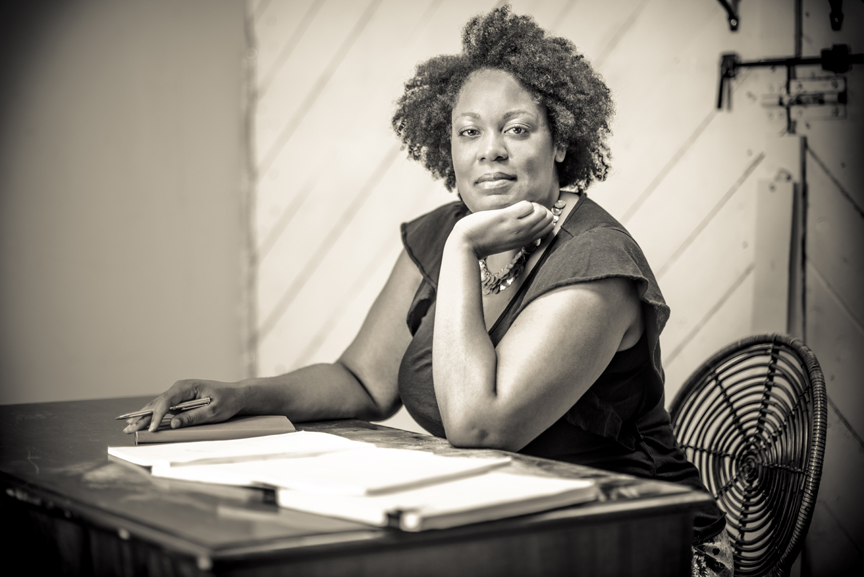
I'm a playwright, dramaturg, and teaching artist. It is here where you'll find my queries and musings on life, theater and the world. My posts advocate for diversity, inclusion, and equity in the American Theatre and updates on my own work. Please enjoy!
Categories
All
Archives
June 2020
Reading List
|