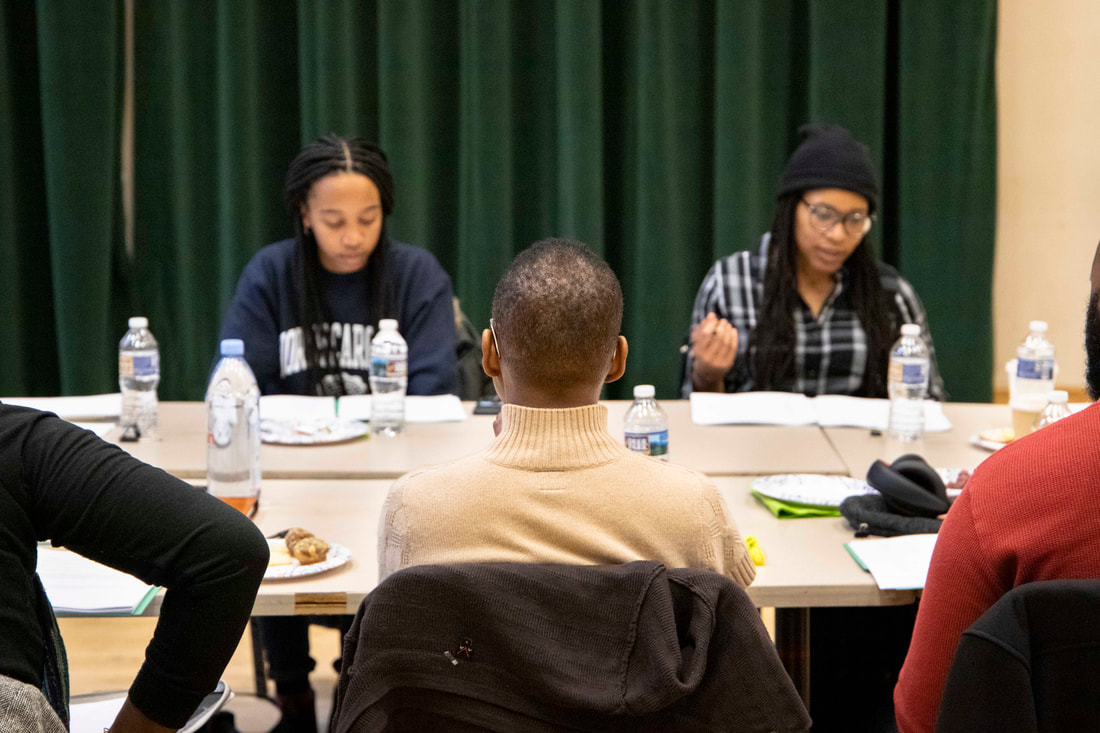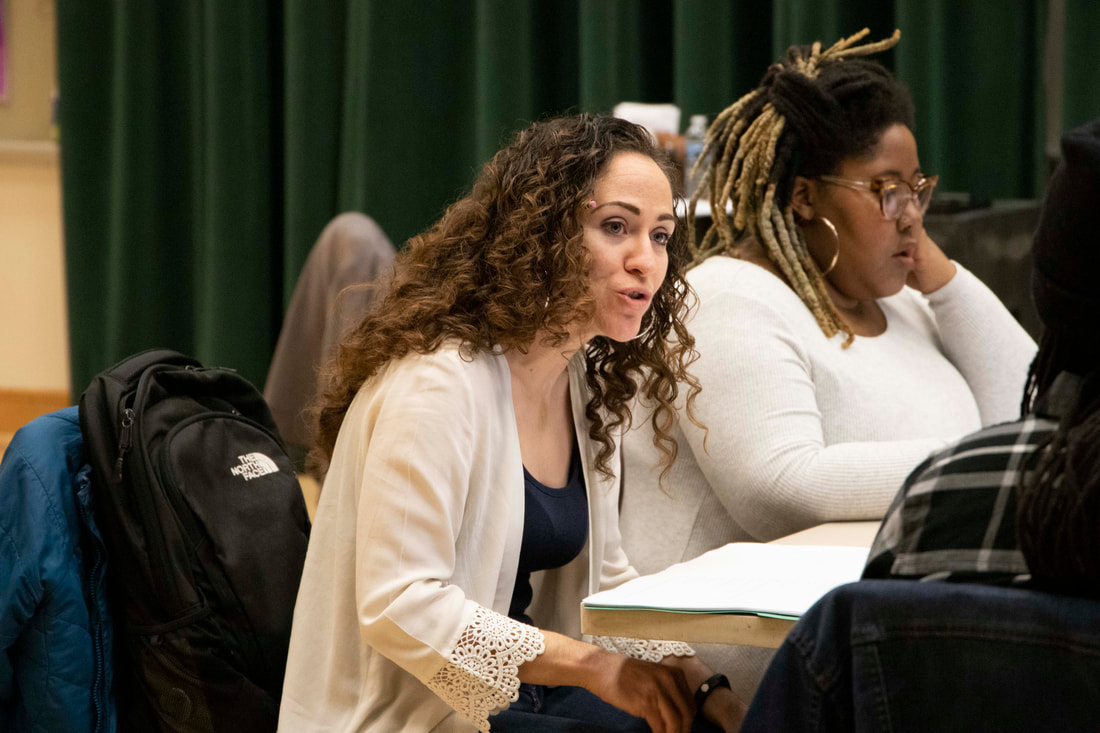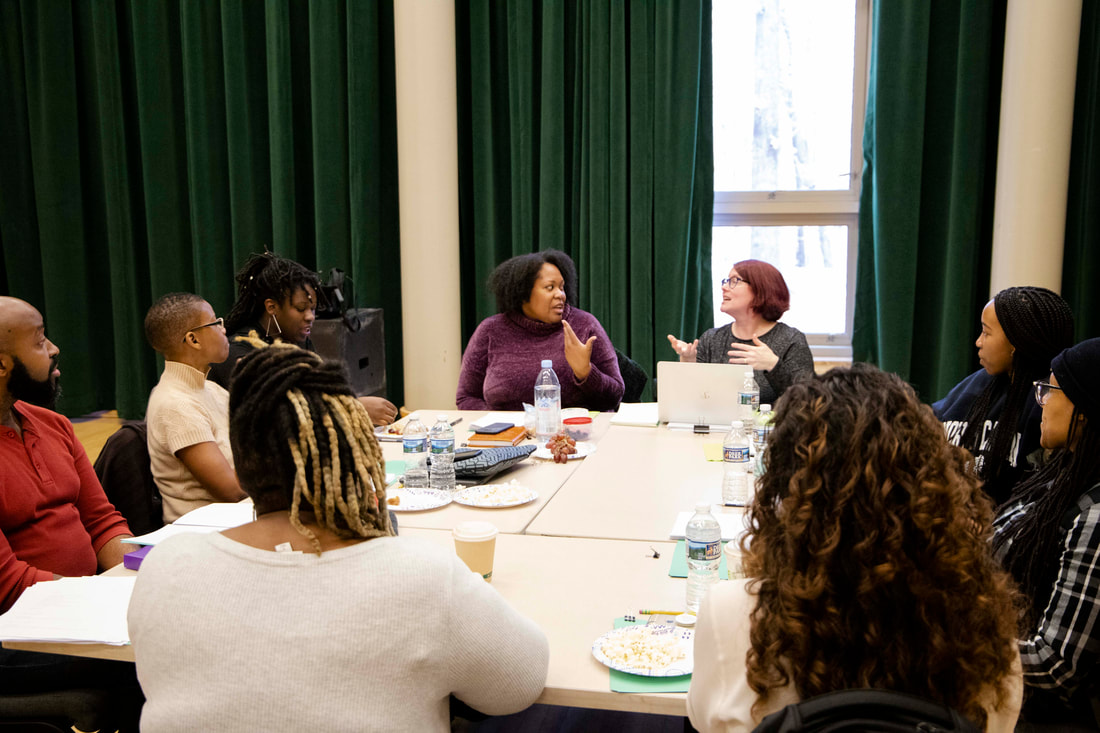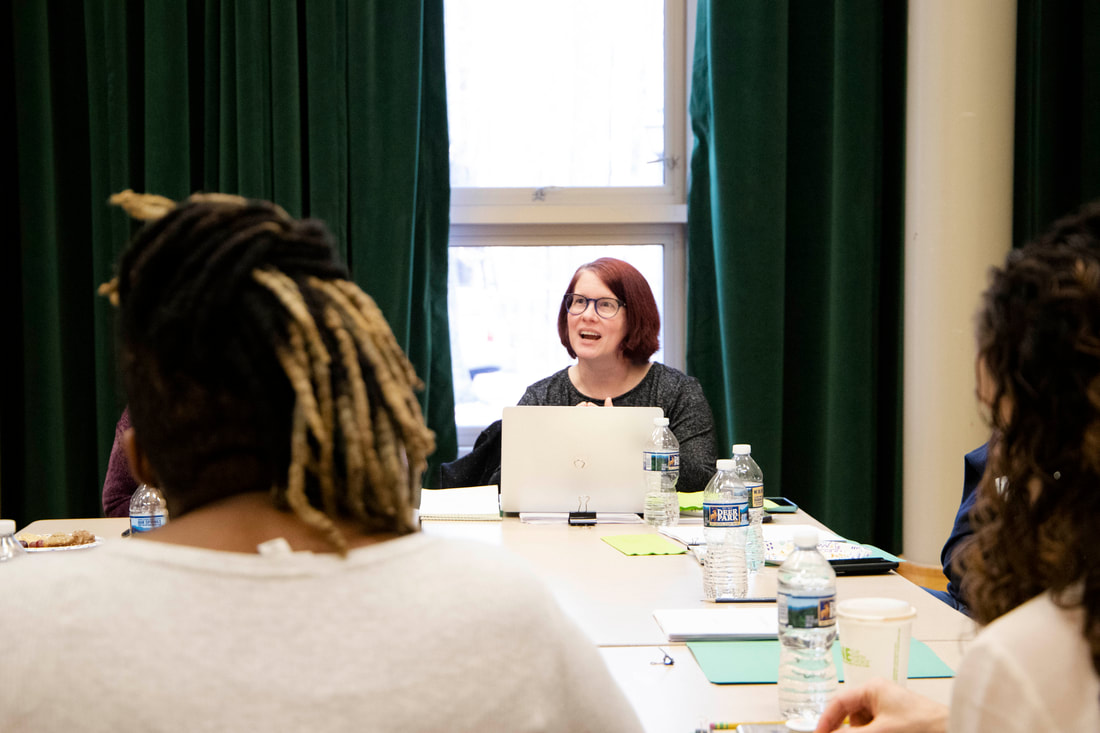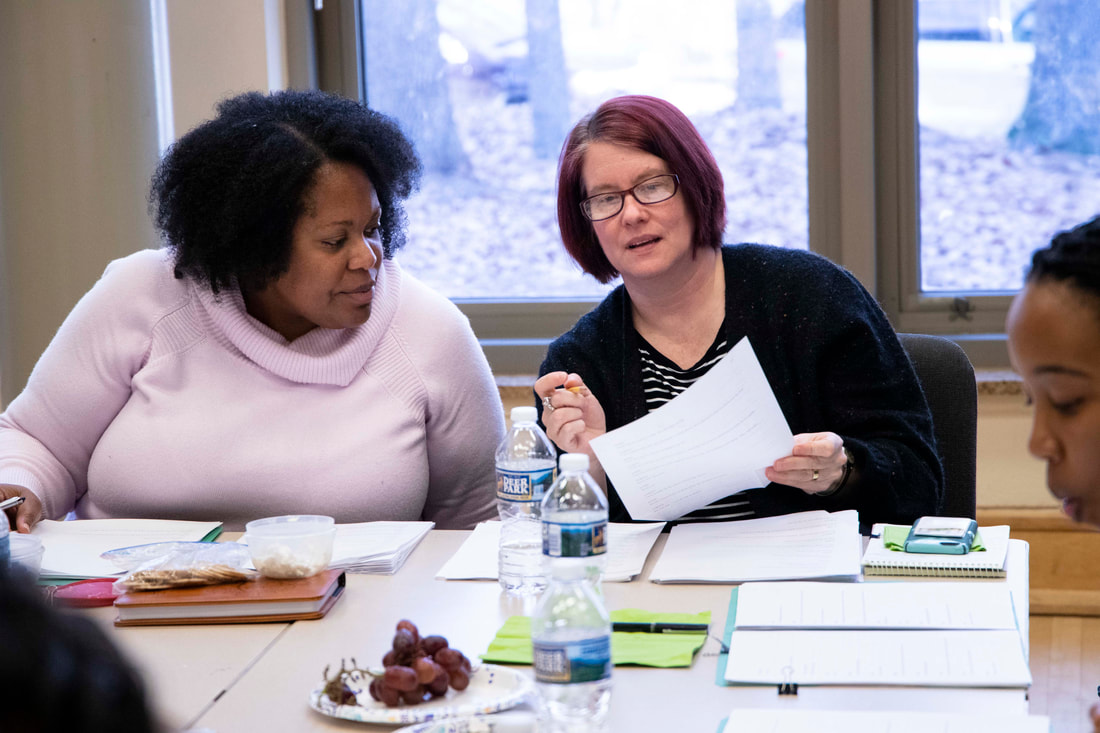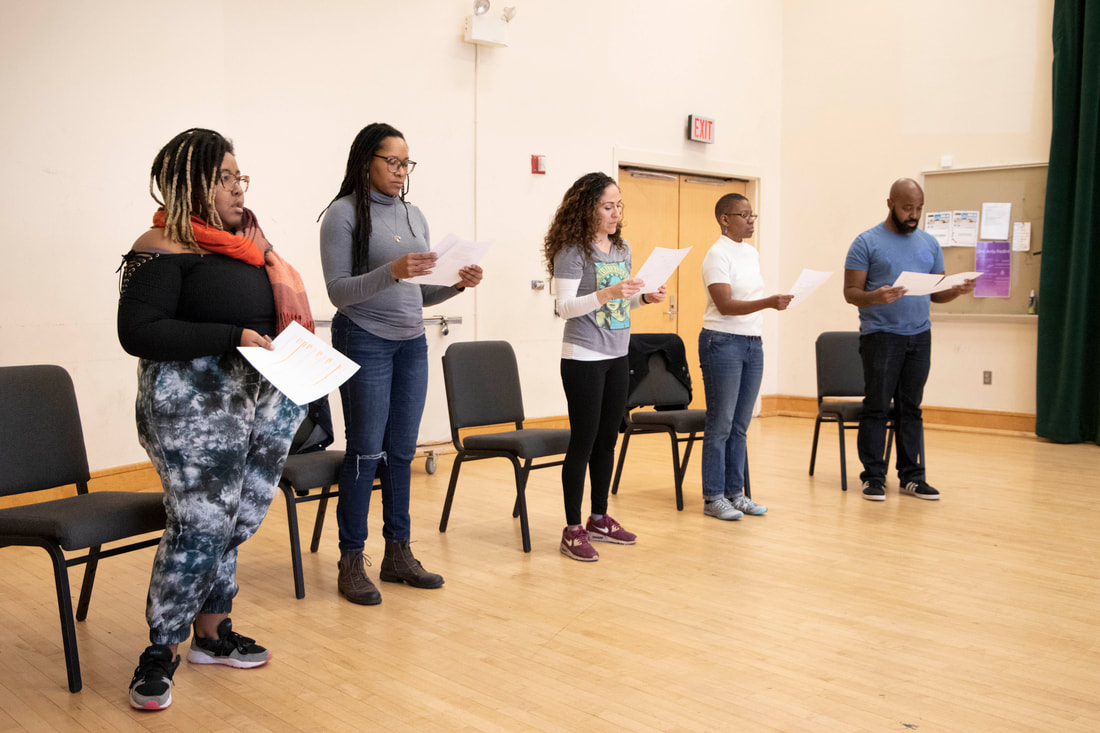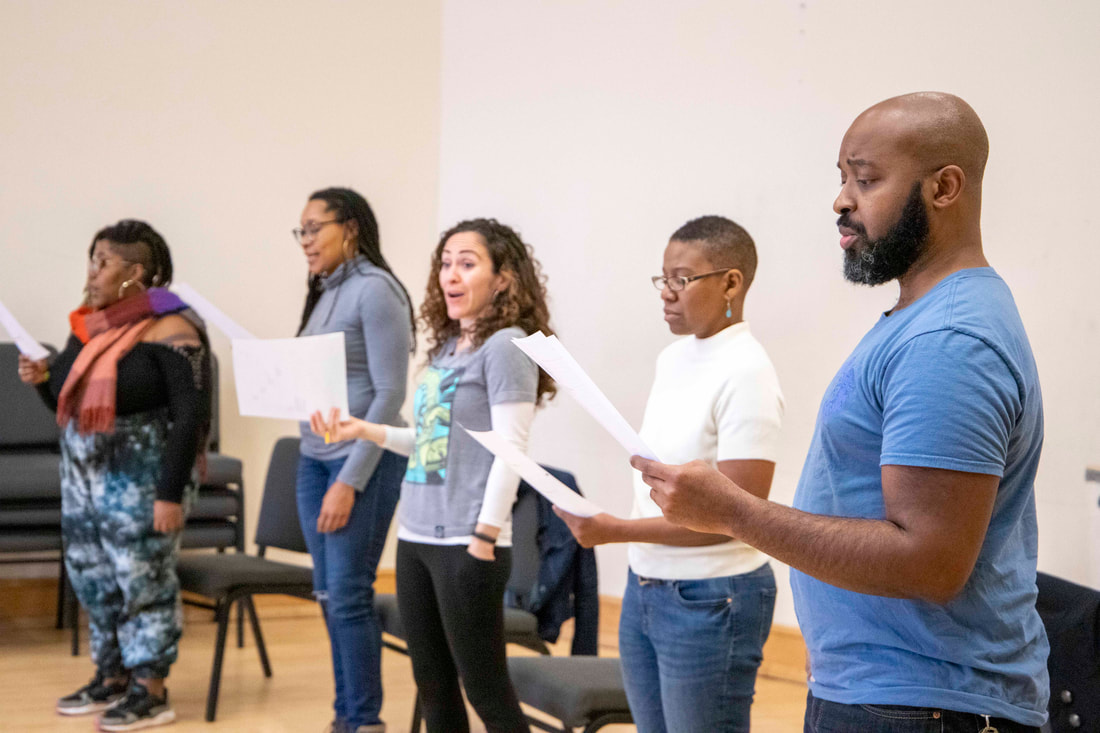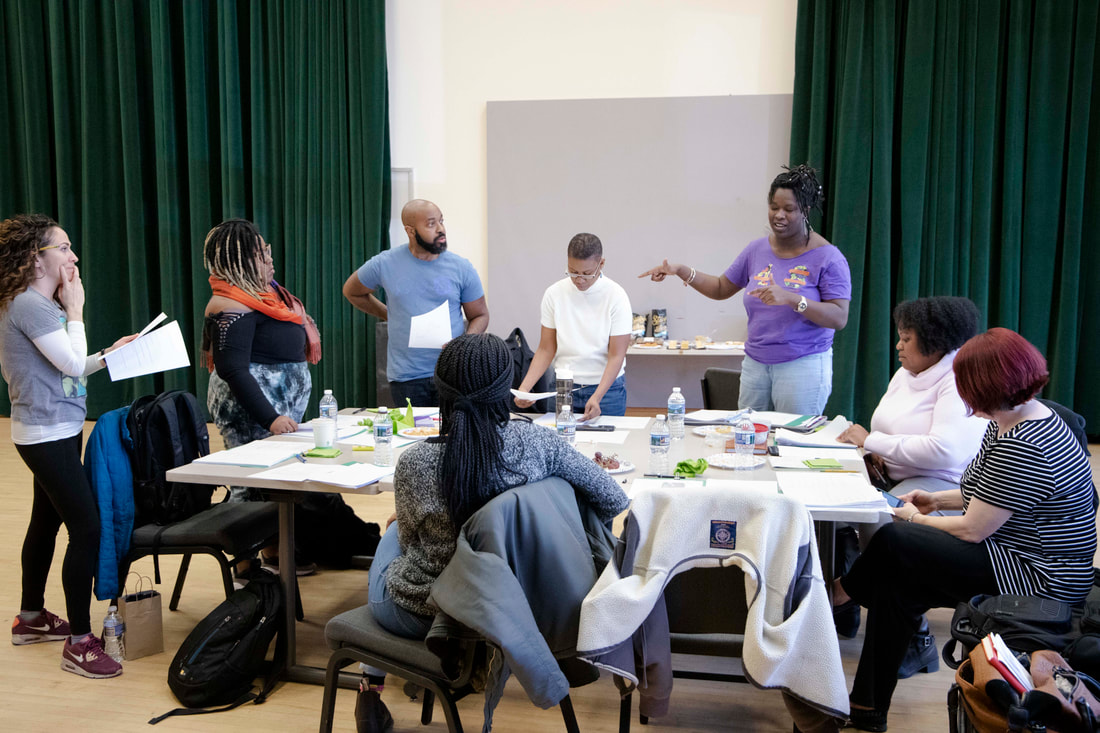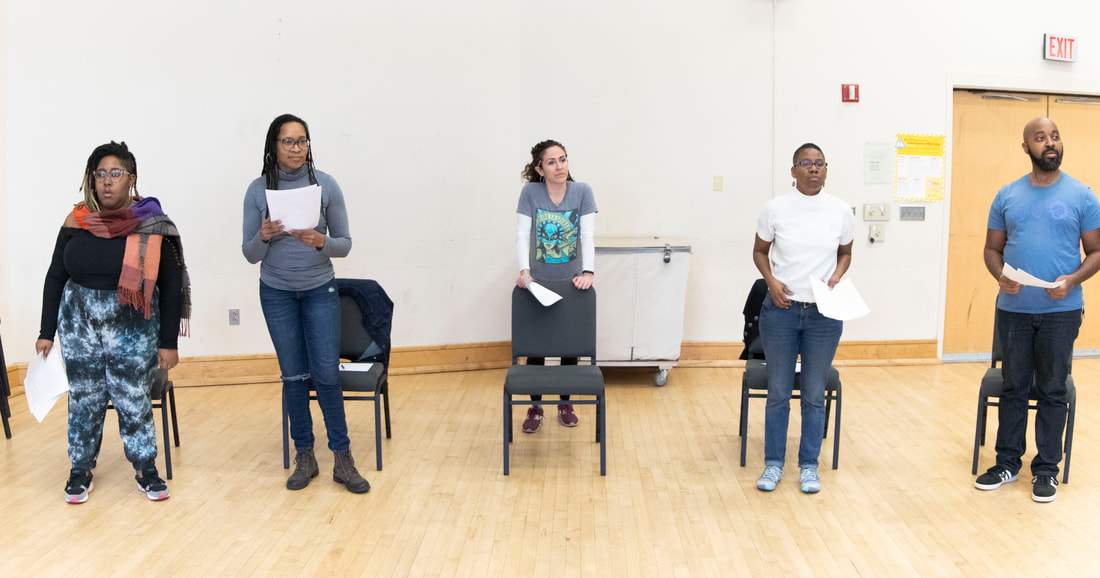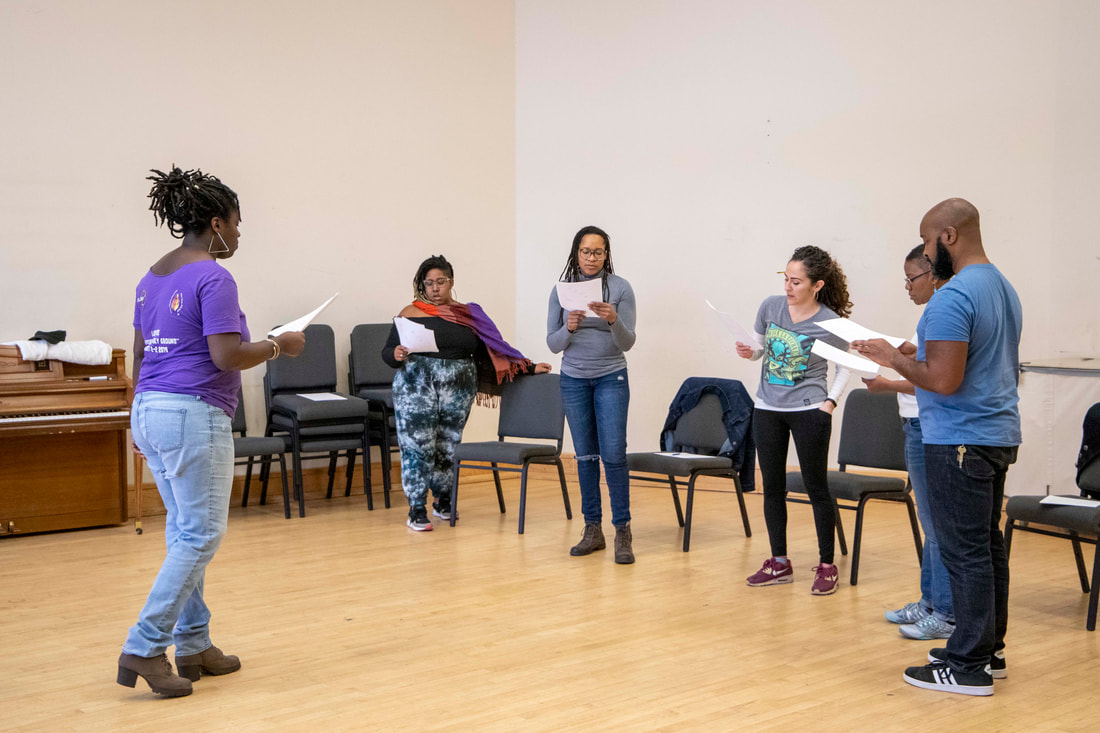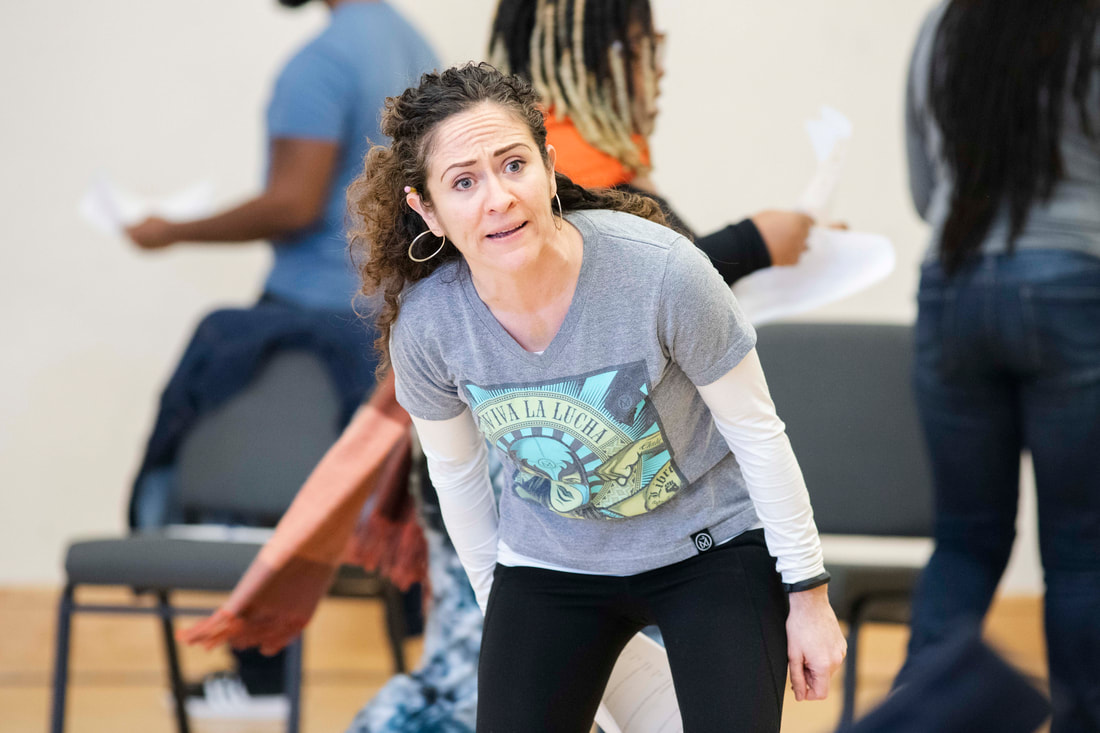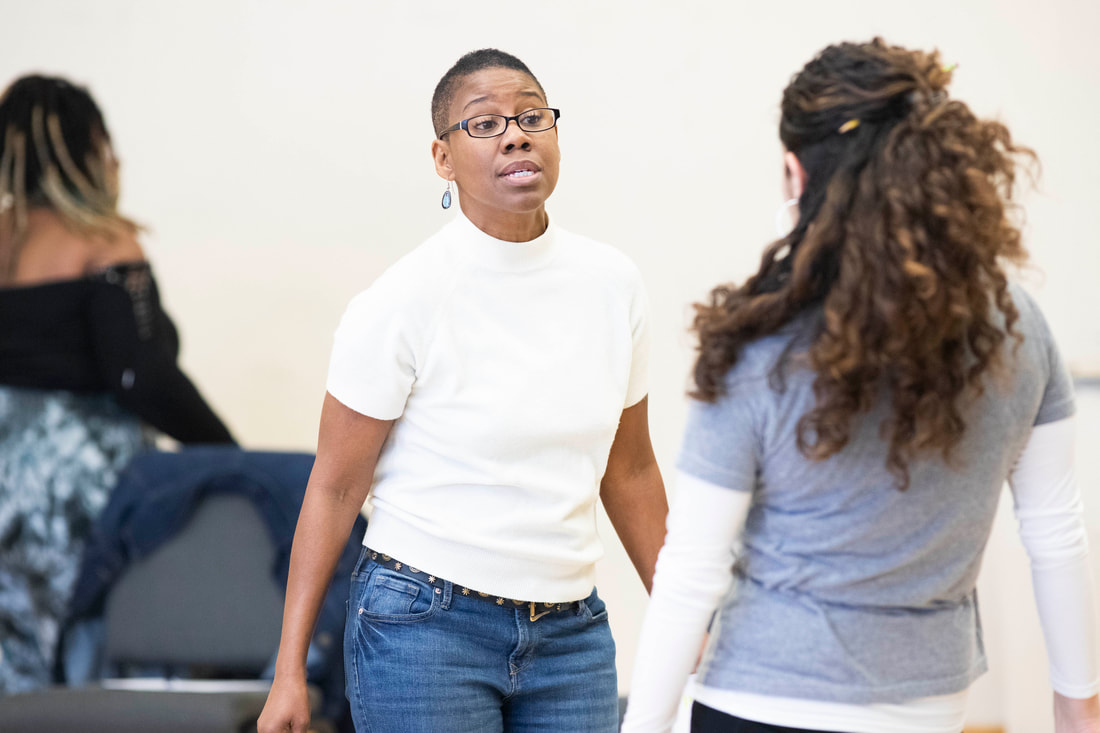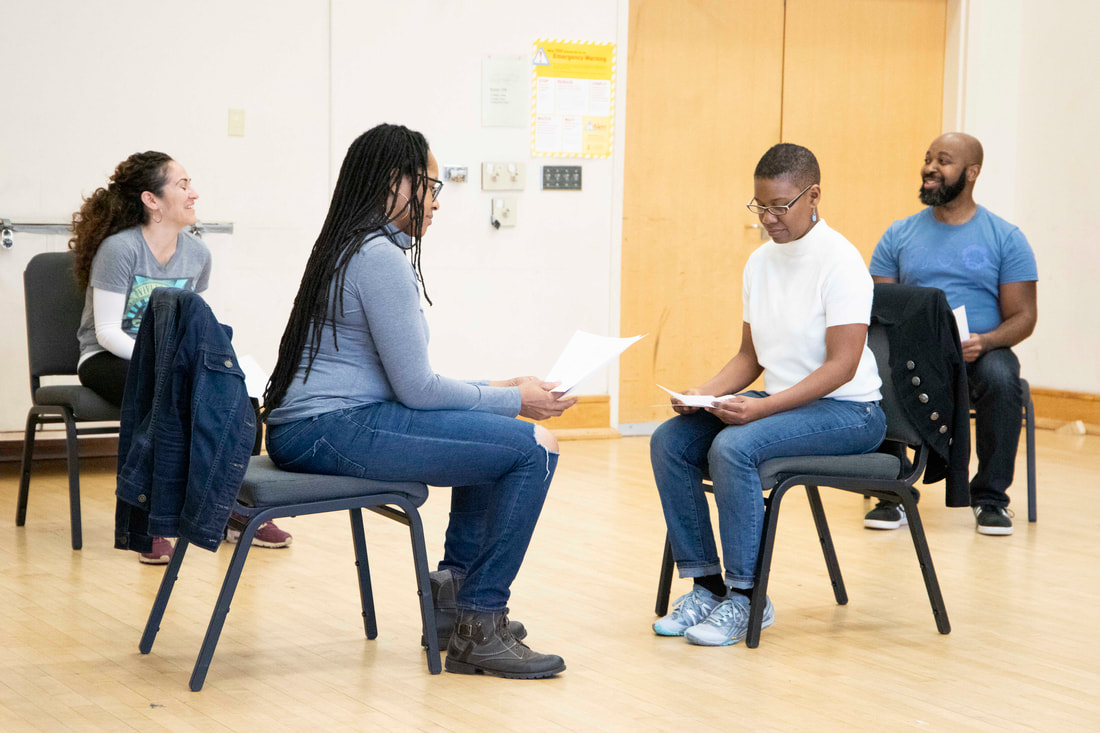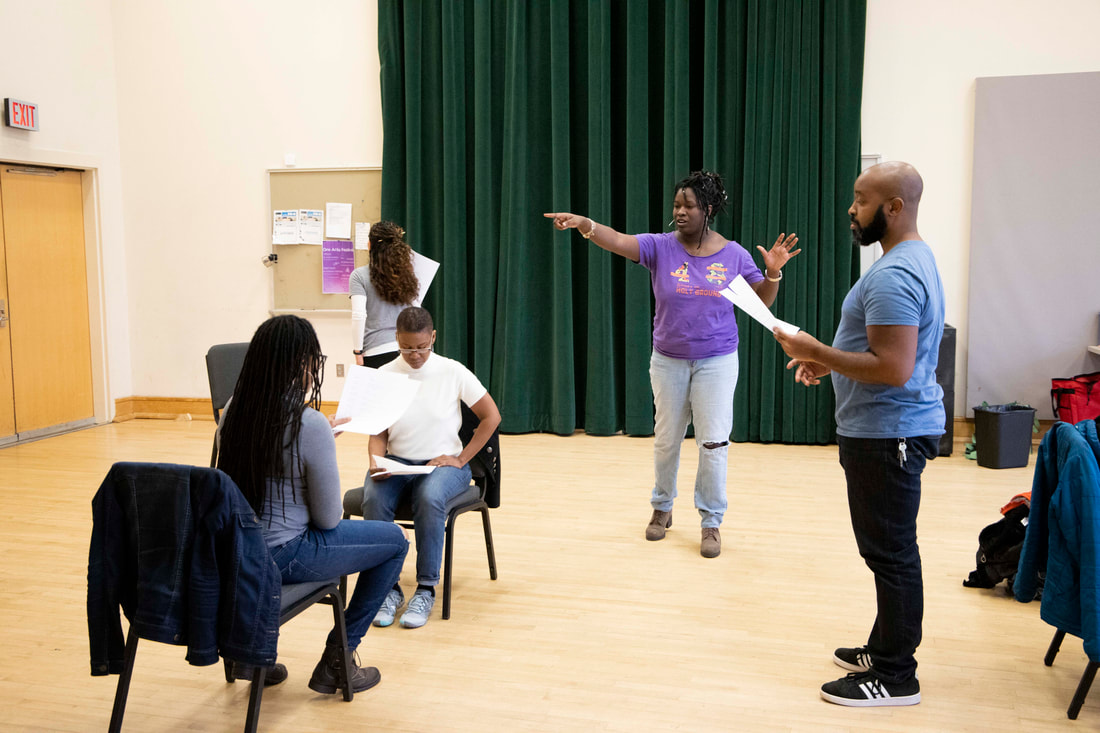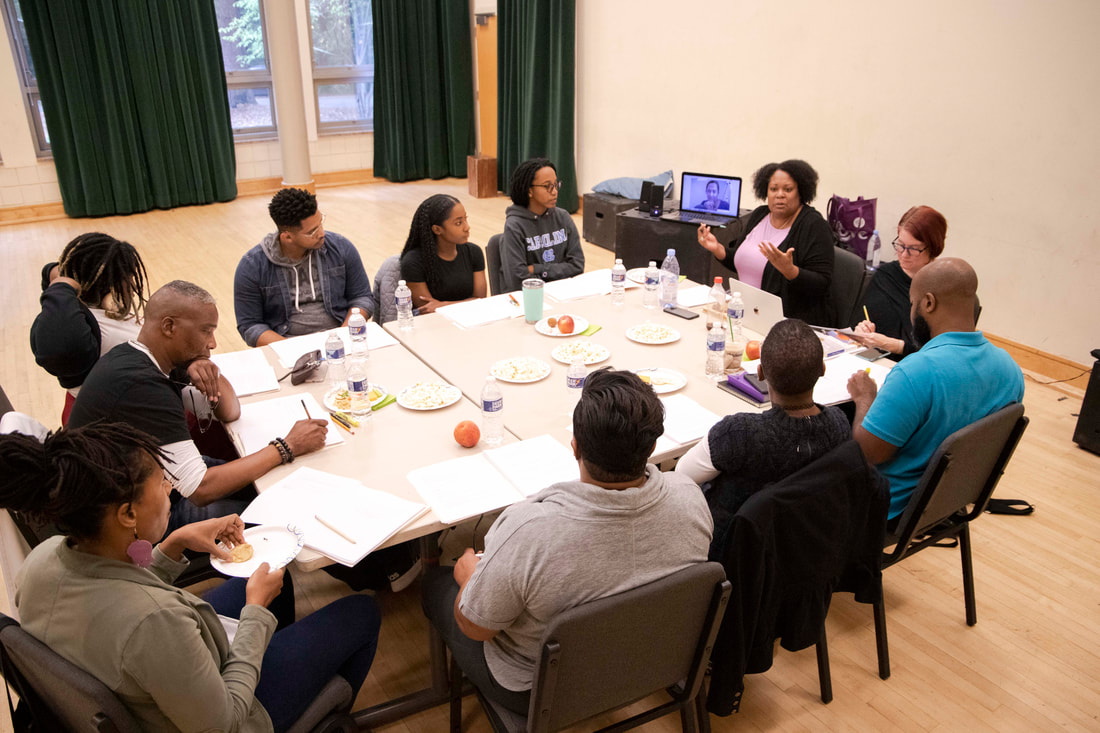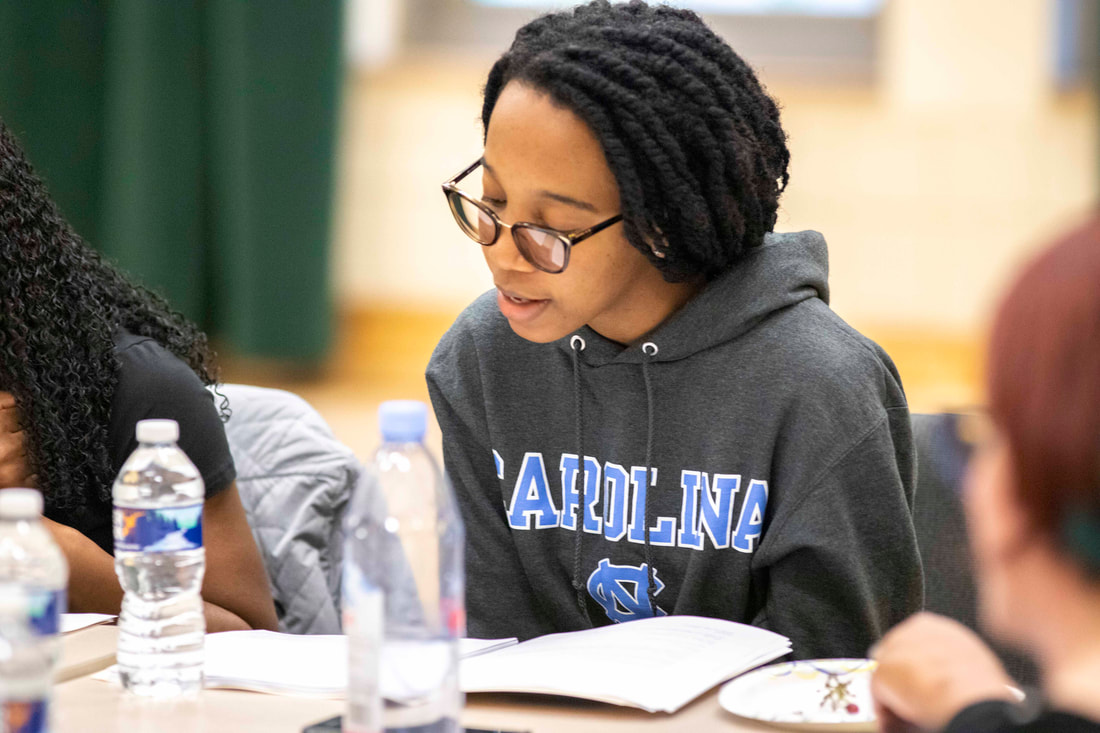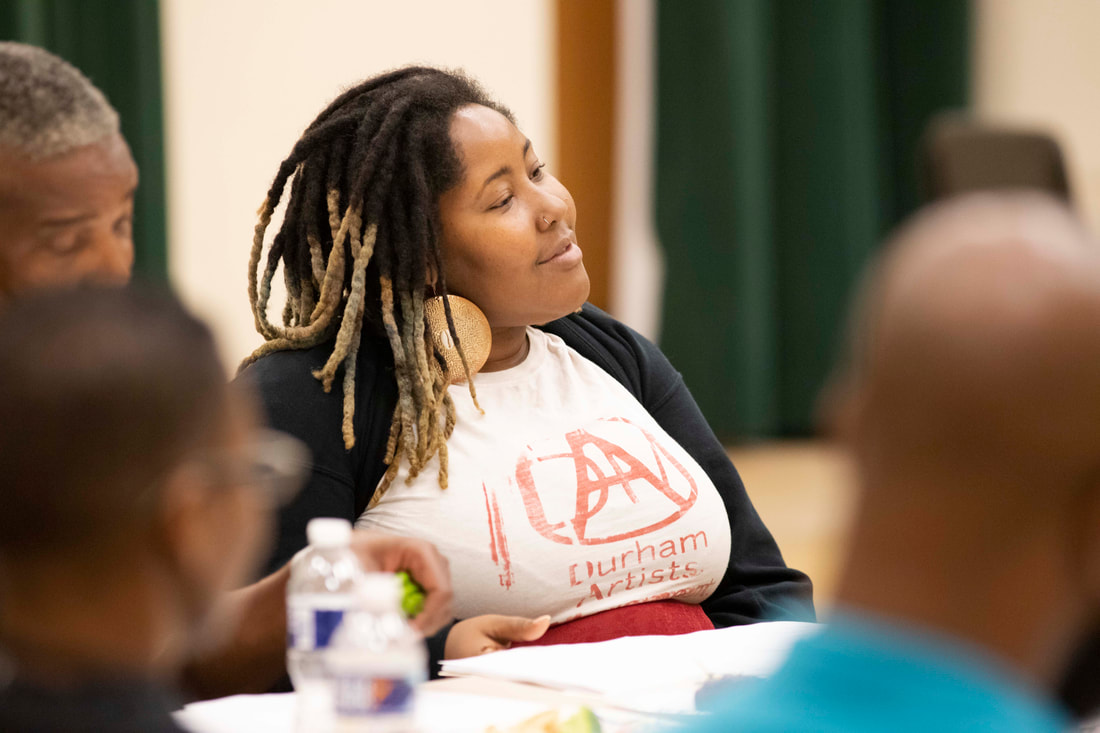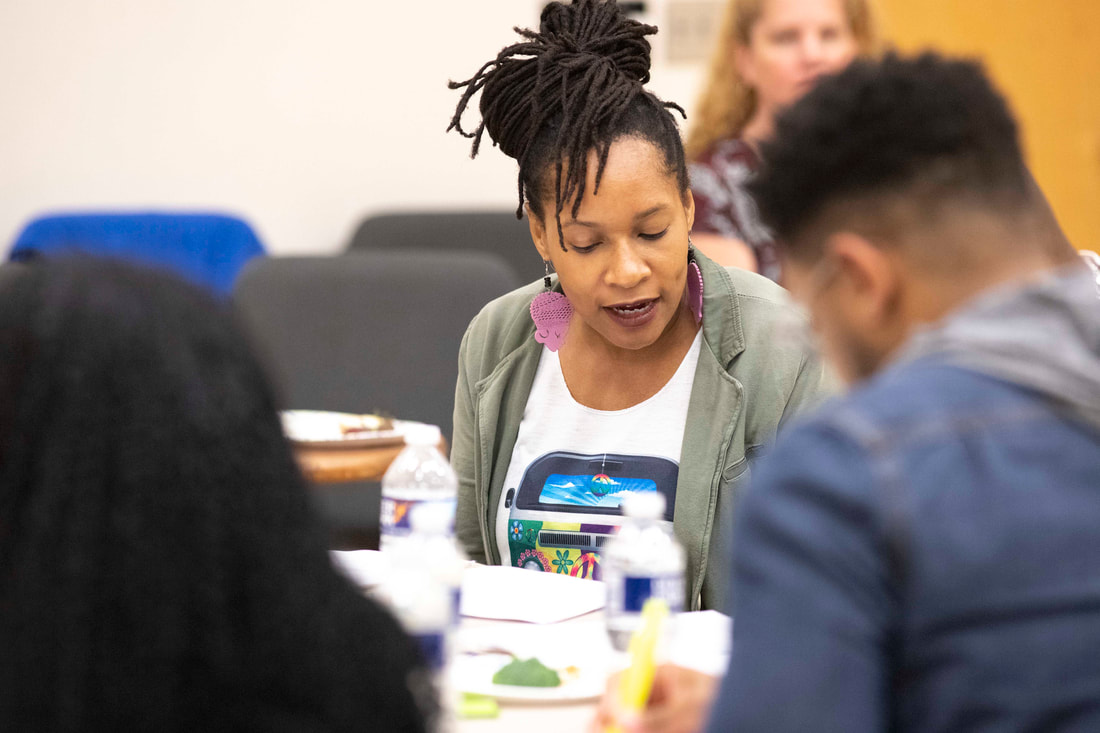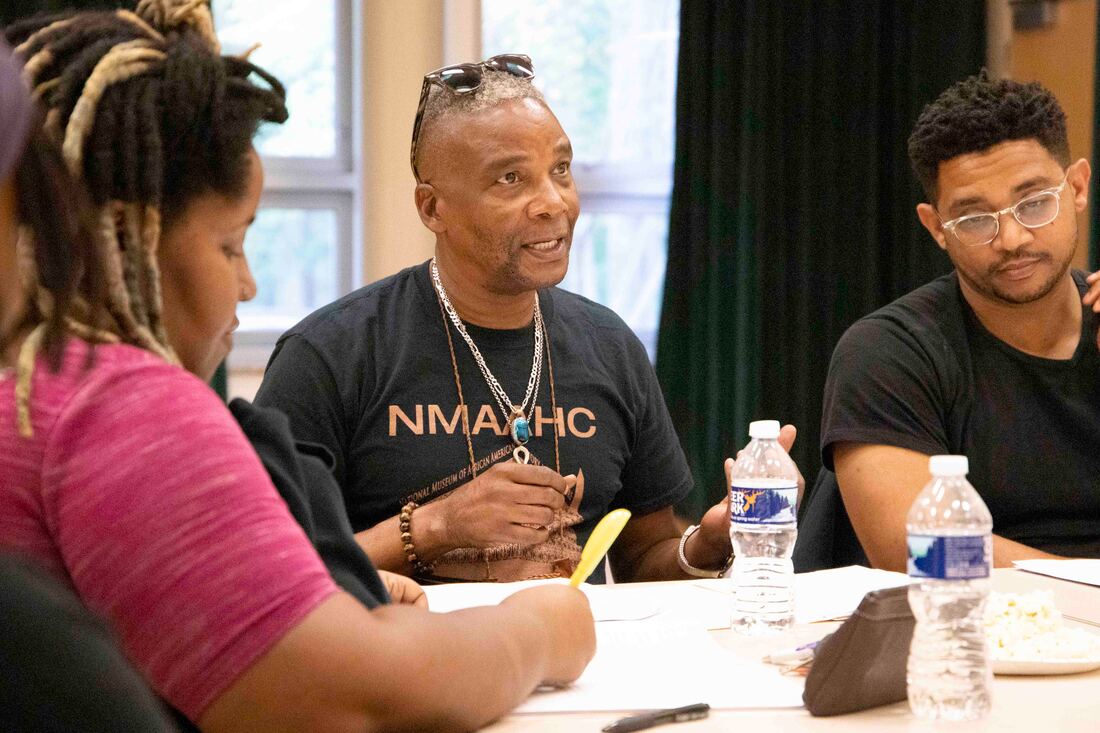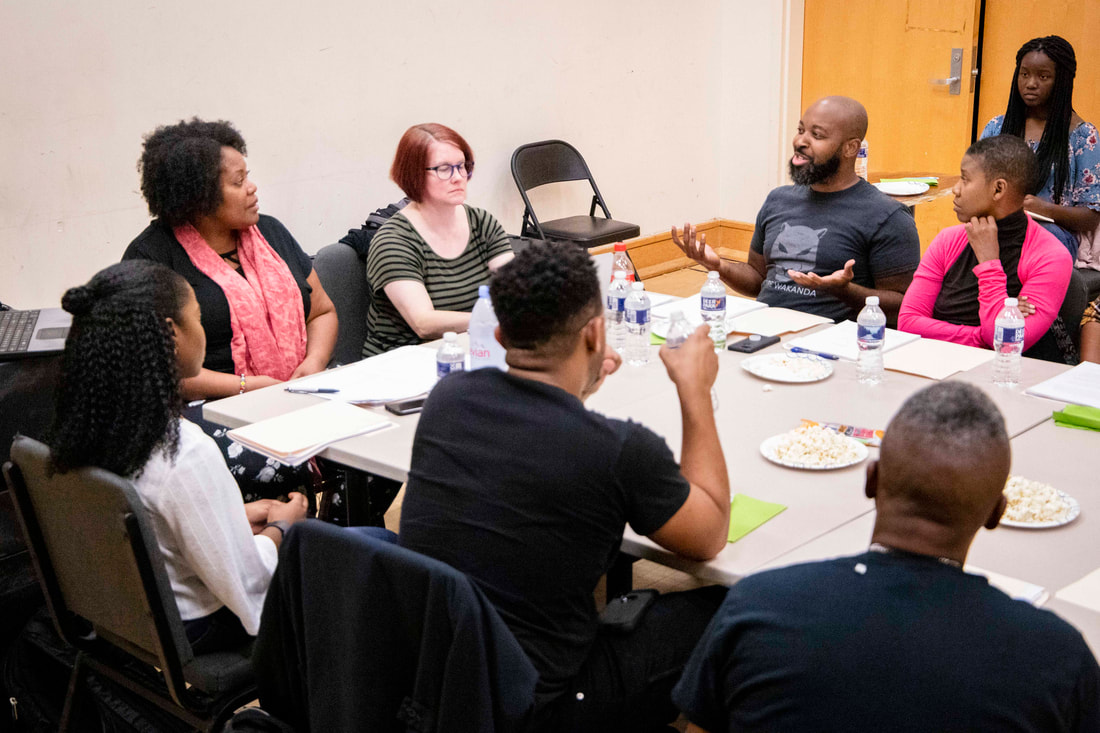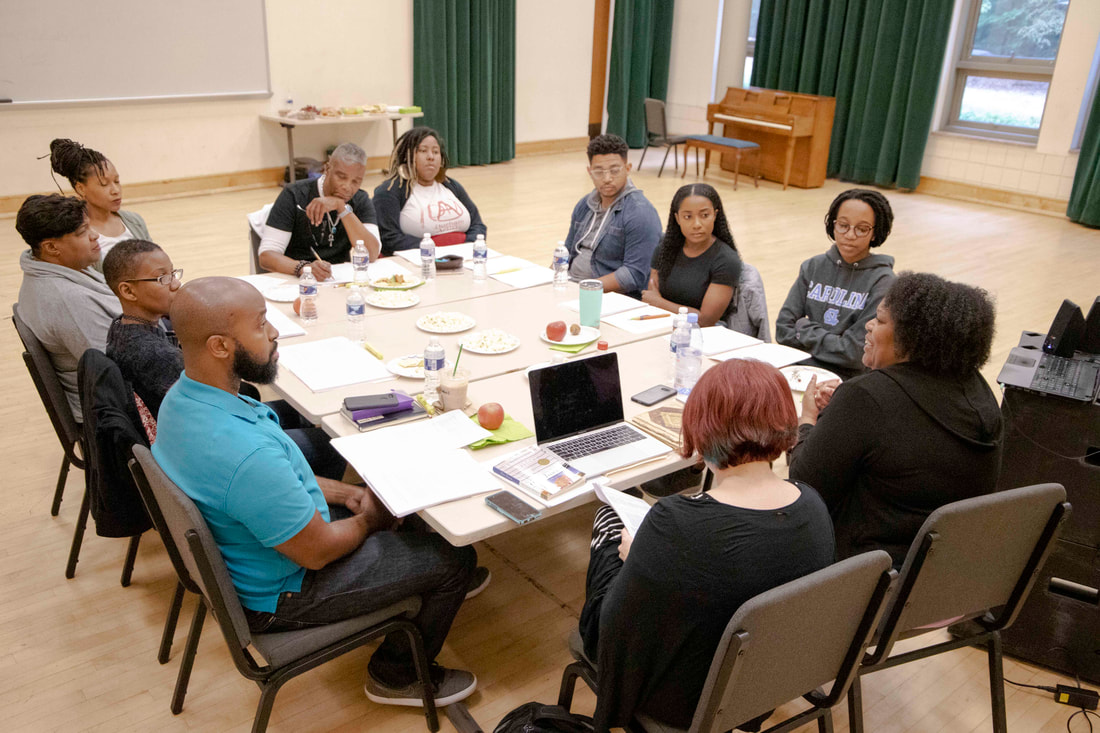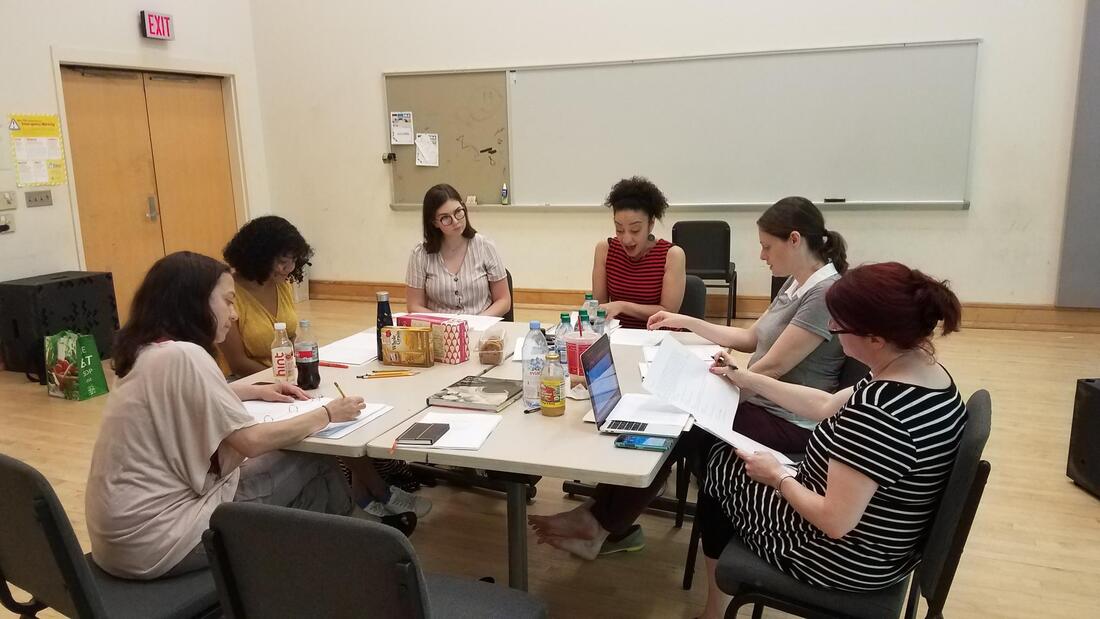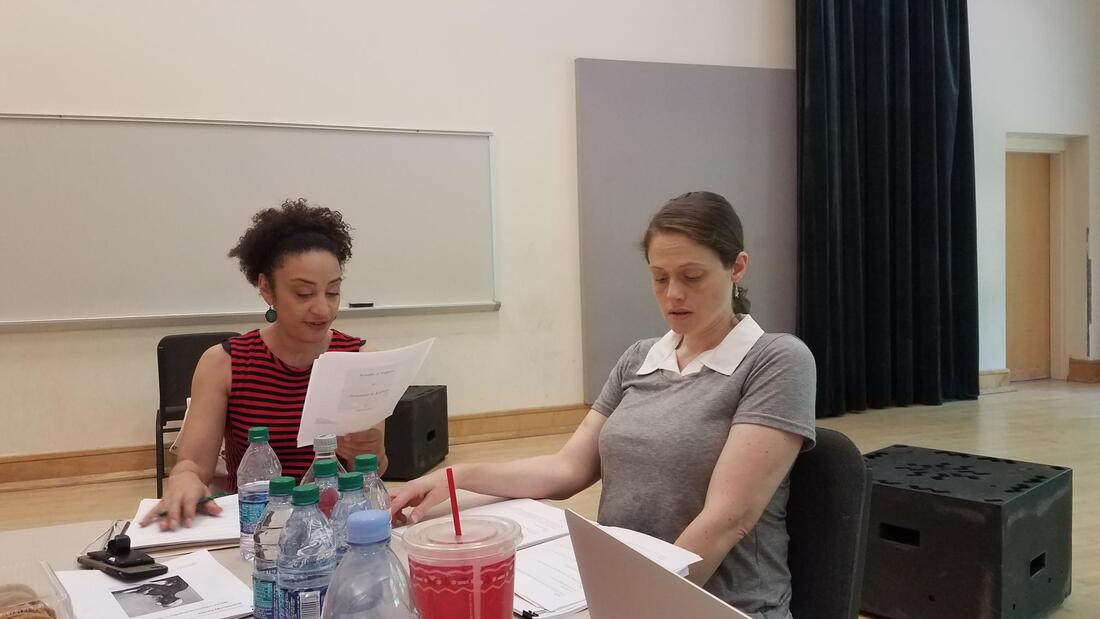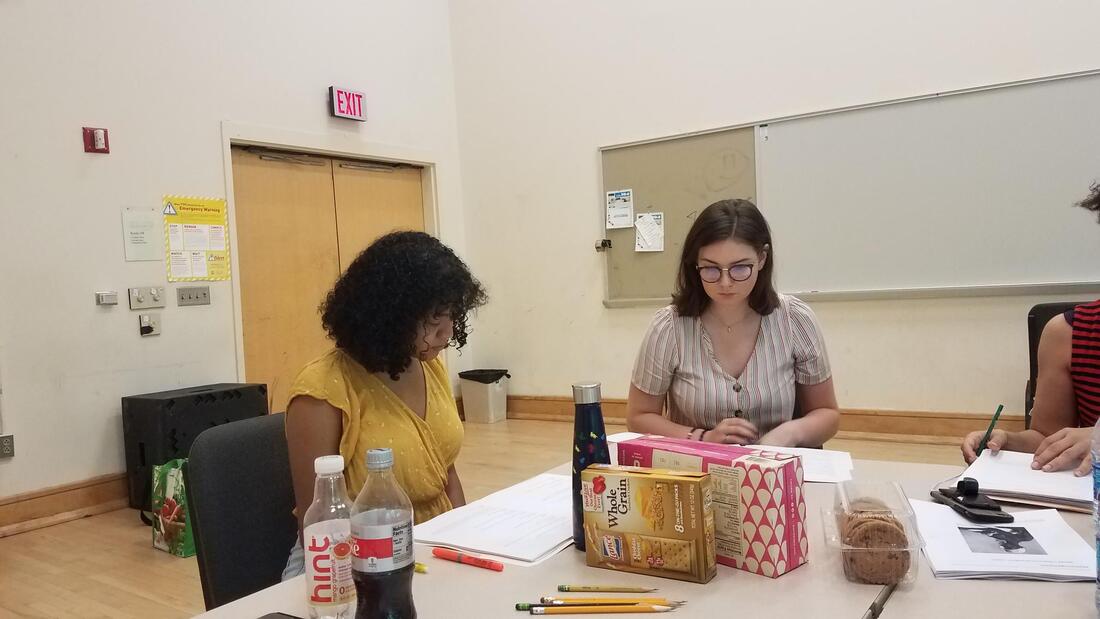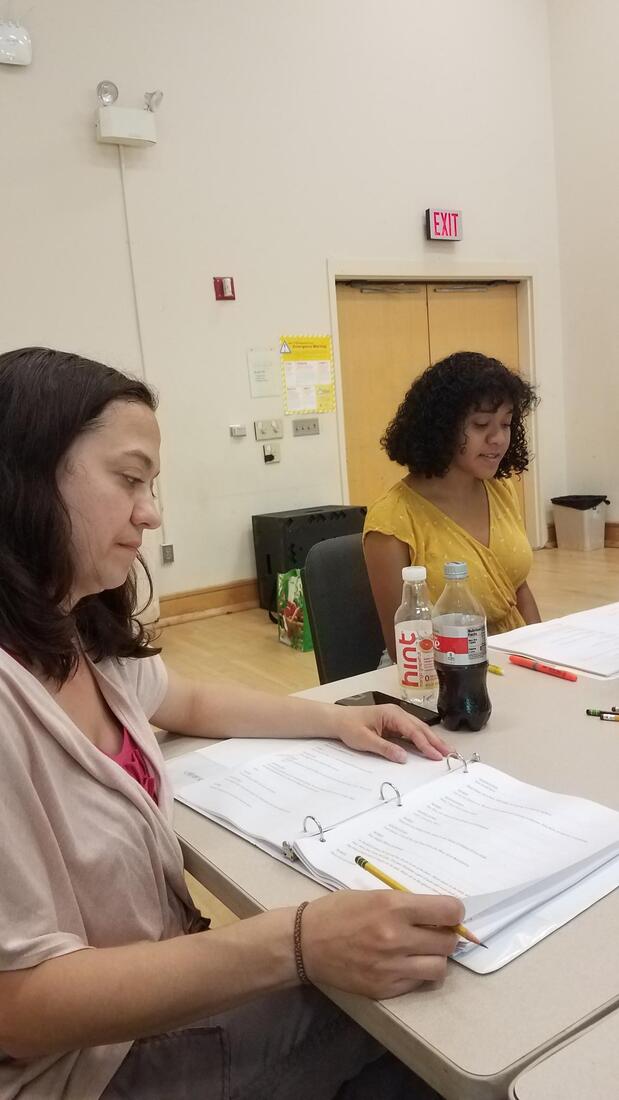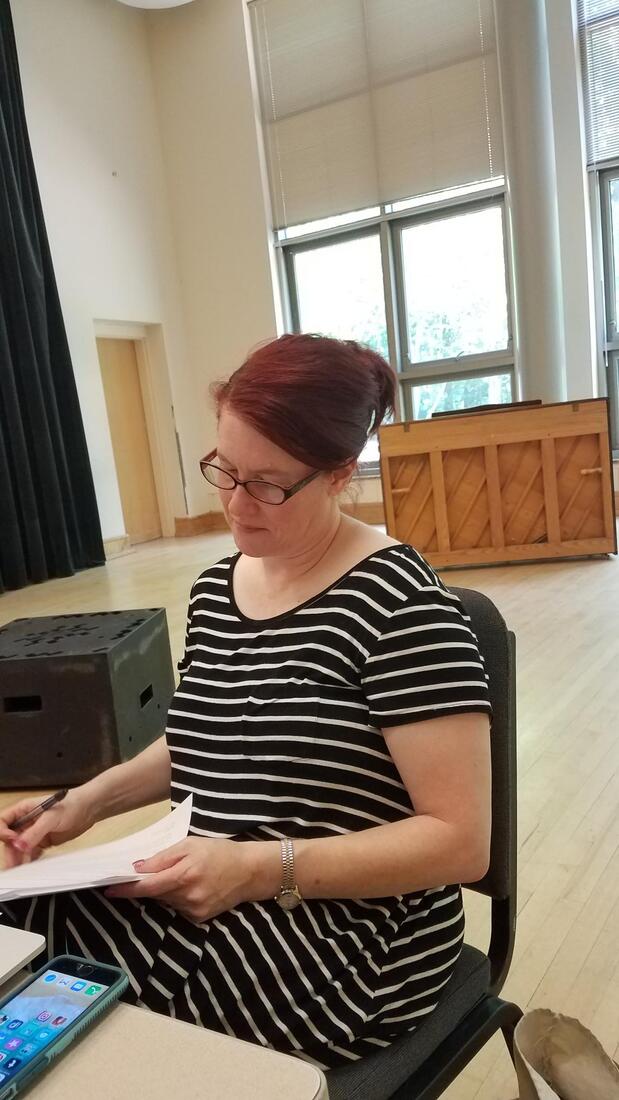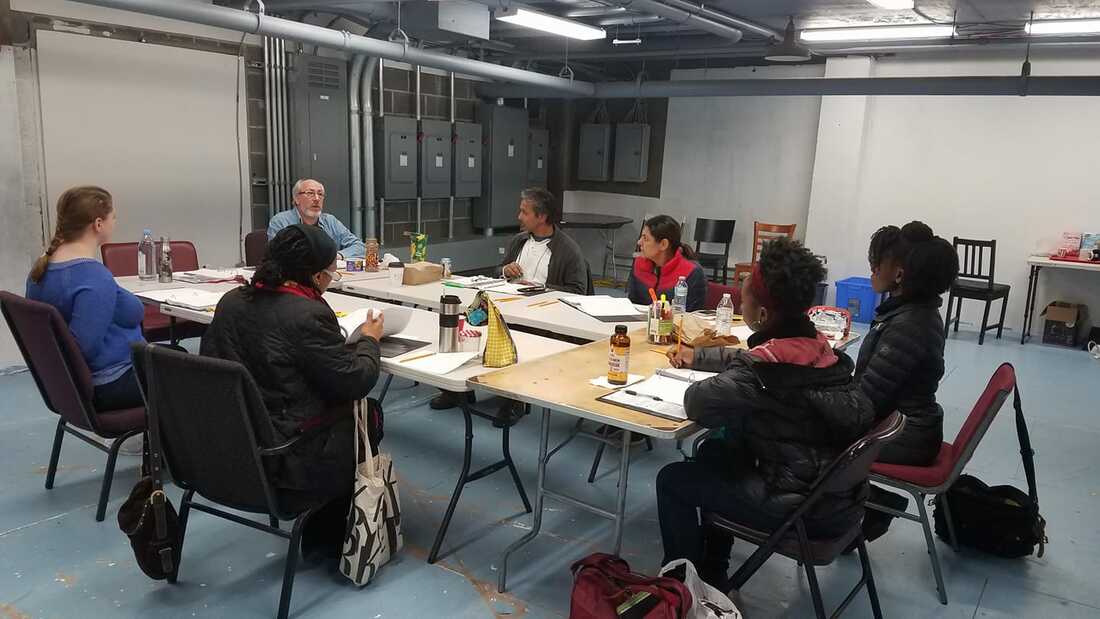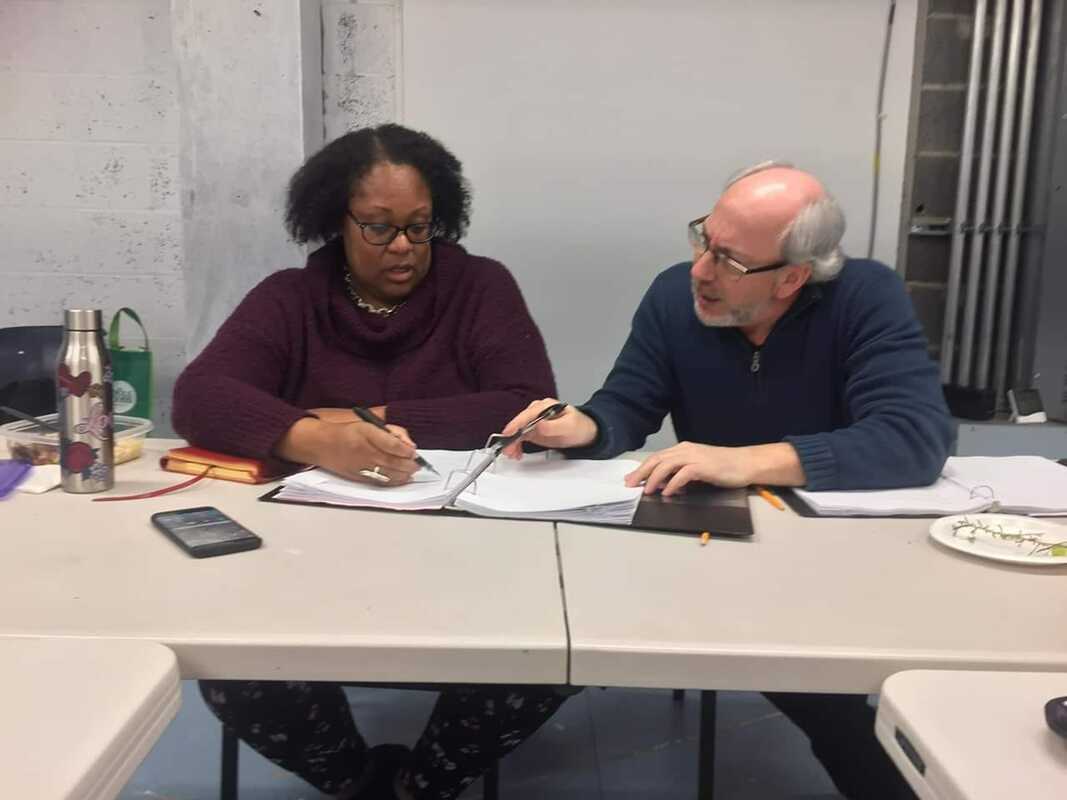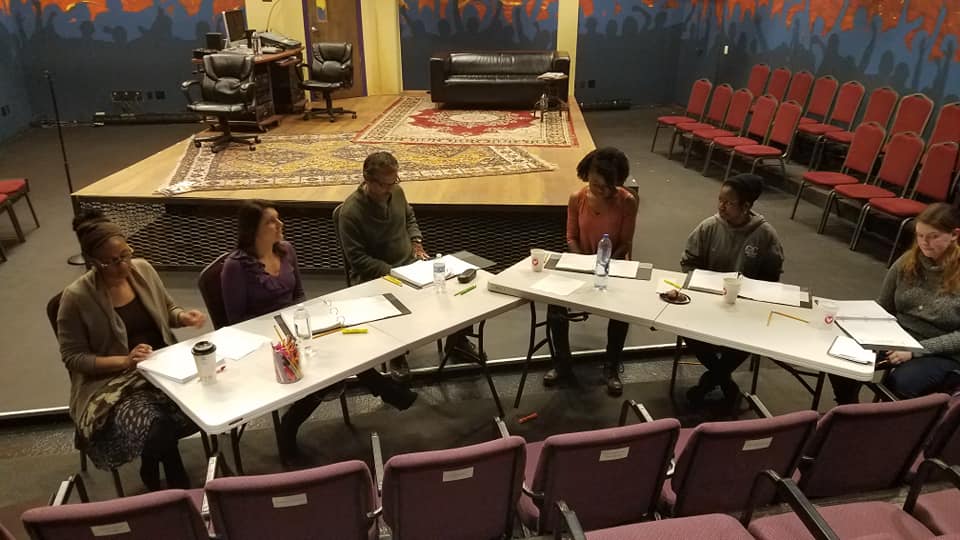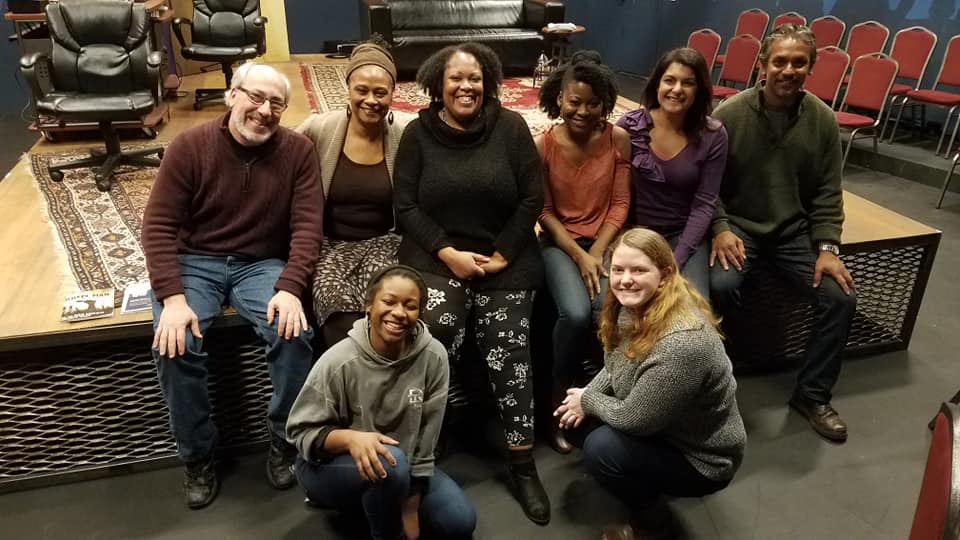
On Saturday, June 1st and Sunday, June 2nd, The Hub Theatre will present their first ever Play Fest, a staged reading festival showcasing new plays by contemporary. “These are adventurous plays that are quirky and funny, and full of heart and sometimes heartache,” said Helen Pafumi, Hub’s artistic director in a recent feature. “Staged readings are a wonderful way to introduce plays or playwrights to our community.” In addition to four staged readings, the Play Fest will feature two panel discussions about new play development and gender parity in the American theatre. All events are free, but seating is limited. Click here to reserve a ticket! Here's the line-up:Saturday, June 1 at 1 PM She Rode Horses Like the Stock Exchange by Amelia Roperdirected by Robert Luftyfeaturing Laura Baranik, Patrick Foley, Heather Howard, Jon Odom, and Eric Tucker About the PlayIn a nice New England park, in a nice New England city, two nice New England couples try very, very hard to be nice to each other, while the world around them falls apart. An absurdly funny and terrifying ride through downsized, foreclosed America. Saturday, June 1 at 3 PMPanel Discussion - Gender Parity in American TheatreModerated by Jacqueline Lawton with panelists Eleanor Holdridge (Freelance Director, Catholic University Head of MFA Directing Programs), Michael Dove (Artistic Director, Forum Theatre), and Helen Pafumi (Playwright and Artistic Director, The Hub Theatre). While female theatre artists make up over 50% of those involved in the theatre, why are so few female playwrights being produced? Why so few female directors helming shows? Listen to our esteemed panelists discuss the gender divide and what theaters can do to address the issues. Saturday, June 1 at 4 PMThe Electric Baby by Stephanie Zadrevec directed by Kasi Campbellfeaturing Peter Boyer, Jimmy Flanagan, Nanna Ingvarsson, Rana Kay, Leo Sheridan and Mary Beth Wise. About the PlayIn this dazzling new play, three very different couples discover that their lives are connected in ways that none of them could ever imagine. A middle-aged couple confronts the secrets of their troubled marriage. A young woman becomes attached—literally—by a pair of pink, fluffy handcuffs to the hopeful young man who secretly loves her. And a Romanian mother and Nigerian father care for their child, who glows like the moon—and brings everyone together to experience the power of storytelling, the importance of community, and the hope of new beginnings. Sunday, June 2 at 1 PMFailure: A Love Story by Philip Dawkins directed by Helen Pafumi featuring Michael Kevin Darnall, Kristen Garaffo, Katie Jeffries, Rose McConnell, Janel Miley, Noah Mitchel, Belen Pifel, Casie Platt and Chris StinsonAbout the PlayA magical, musical fable about the triumphs and aspirations of three sisters living in the rickety two-story building by the Chicago River which was the Fail family home and clock shop in 1928. Nelly was the first to die, followed soon after by sisters, Jenny June and Gerty. As with many unforeseen circumstances in life—blunt objects, disappearances and consumption—they never saw death coming. This profoundly funny and moving story reminds us that in the end, all that remains is love. Sunday, June 2 at 3 PMPanel Discussion - New Play DevelopmentModerated by Kristen LePine with panelists Anne McCaw (Executive Director, The Inkwell), Allyson Currin (Playwright in Residence, Theatre J), Helen Pafumi (Playwright and Artistic Director, The Hub Theatre), Randy Baker (Playwright and Co Artistic Director, Rorschach Theatre), Jojo Ruf (General Manager, National New Play Network). What goes into developing a new play for production? The Hub gathers theatre experts from across the Washington Metro area to share their insights about the challenges, the process, and their successes in selecting and developing new work for production. Sunday, June 2 at 4 PMChing Chong Chinaman by Lauren Yee directed by Lee Mikeska Gardner featuring Jennifer Knight, Hazel Loranzo, MiRann Powell, Al Twanmo, Jonathan Wong, Jacob Yeh and Nicholas Yenson About the PlayTurning every cliché about Asian American identity on its head, CHING CHONG CHINAMAN introduces us to the all-American Wong family: Ed the patriarch loves to golf and mom Grace wants another child; Desdemona obsesses over early admission into Princeton while her brother Upton is focused on World of Warcraft superstardom. To ease the burden of homework and free up more time for training, Upton acquires an indentured servant from China. Life in the Wong household is turned upside down with the arrival of Jinqiang ("Ching Chong")... who harbors his own American dreams! All events are free, but seating is limited. Click here to reserve a ticket! The Hub Theatre is an award winning, professional non-profit theatre making its home in Fairfax County, Virginia. The Hub Theatre is a member Theatre Washington. The Hub has received grants from Target, the Fink Foundation, the Arts Council of Fairfax, The Friends of Lake Anne, Virginia Commission for the Arts, the Arts Council of Fairfax, Integrity Applications, and Booz Allen Hamilton.
Mission The Hub Theatre endeavors to produce work that highlights our common humanity, providing a theatrical experience that is at once challenging and inclusive. We strive to be the physical center of a dynamic circle of story, art, and community, to create the transcendent exchange unique to live theatre.
On Thursday, May 23rd at 11:00am, I'll be joining We Act Radio host Thomas Byrd along with Deborah Simmons, award-winning correspondent with the Washington Times; Julia E. Christian, Anacostia Playhouse's Managing Director; Katie Ryan, Theatre Alliance Education and Outreach Director; and Virginia Spatz, The Education Town Hall's feature reporter, for an in-depth discussion on Arts Education versus Job Training at public universities and in tough economic times on The Education Town Hall radio show. Click here to listen live. The Education Town Hall with Thomas Byrd is the premiere Local Live Wire show on We Act Radio, WPWC broadcasting from Historic Anacostia in Washington, DC. The show is a weekly one-hour forum dedicated to every aspect of educating our students. Tune in: Thursday mornings at 11:00 on 1480 AM or on-line. Be sure to visit WeActEd, the Education Town Hall blog and listen for us on MixCloud or here to listen live. We Act Radio is a media corporation that combines broadcast and new media to deliver our shows in the formats people use most. You can follow their shows by streaming them at WeActRadio.com, listening on AM and FM radio stations around the country, downloading them via podcast or on iTunes, or subscribing to their YouTube channel. Click here to listen live. ABOUT THE HOST THOMAS BYRD
For the past 15 months Thomas K Byrd has Hosted and Produced the Education Town Hall Show on We Act Radio. He created the show to facilitate the construction of effective community supported solutions and to foster the incitement of strategic transformative actions. During this time Thomas has been pleased to be able to provide access to the public square for all stakeholders. He is most proud of being able to provide a megaphone for the voiceless to talk back to power. Thomas Byrd believes that advocating for quality education is not an act only limited to policy makers, non-profit organizations, parents and those in the education field. Education is the great equalizer among all distinctions in society, especially for people of color, and the entire community, even those like himself without children, should be engaged in education reform.
ABOUT THE GUESTS JULIA CHRISTIANJulia E. Christian is the Chief Operating Officer at Anacostia Playhouse and the former managing director at H Street Playhouse and the Theater Alliance. Prior to that, she was Executive Director at CHAMPS - Capitol Hill's Chamber of Commerce. She studied Fine Arts at St. Mary's College of Maryland. JACQUELINE E. LAWTON
Jacqueline E. Lawton was named one of 30 of the nation's leading black playwrights by Arena Stage’s American Voices New Play Institute. Her plays include: Anna K; Blood-bound and Tongue-tied; Deep Belly Beautiful;The Devil’s Sweet Water; The Hampton Years; Ira Aldridge: the African Roscius; Lions of Industry, Mothers of Invention; Love Brothers Serenade (2013 semi-finalist for the Eugene O’Neill Theater Center’s National Playwrights Conference), Mad Breed, and Our Man Beverly Snow. She is a 2012 TCG Young Leaders of Color award recipient and a National New Play Network (NNPN) Playwright Alumna. She has been recognized as a semi-finalist for the Eugene O’Neill Theater Center’s National Playwrights Conference. A member of Arena Stage's Playwright's Arena and the Dramatist Guild of America, Ms. Lawton currently resides in Washington, D.C.
KATIE RYAN
Katie is a Rhode Island native and American University graduate. She also works as the Youth and Outreach Coordinator at The Theatre Lab and as the co-founder of Pamoja Products, a non-profit company that provides a global market for alternative income projects in East Africa. Katie is thrilled to join Theatre Alliance. She sees her position as Education and Outreach Director as an opportunity to instill in the next generation of artists a desire to make positive change in their communities, both socially and politically.
DEBORAH SIMMONS
Award-winning opinion writer Deborah Simmons is a senior correspondent who reports on City Hall and writes about education, culture, sports and family-related topics. Mrs. Simmons has worked at several newspapers, and since joining The Washington Times in 1985, has served as editorial-page editor and features editor and on the metro desk. She has taught copy editing at the University of Maryland at College Park. Mrs. Simmons has appeared on BET's “Lead Story,” “Real Time with Bill Maher” and Mr. Maher's “Politically Incorrect,” “America's Black Forum,” Fox News' “The O'Reilly Factor,” “The Right Side with Armstrong Williams,” C-SPAN's “Washington Journal,” and “This is America with Dennis Wholey.” She also has been a guest radio commentator on NPR, WAMU, WMAL and WOL. Mrs. Simmons attended the University of the District of Columbia and Trinity College.
For the Dramatist Guild of America's first special edition of THE DRAMATIST, editor Joey Stocks asked eleven dramatists: What play, musical, or theatrical event – anywhere in the world – most excited/inspired you this season?
Here's my contribution: Having experienced both IN THE CONTINUUM and ECLIPSED, the play I was most excited to see this season was Danai Gurira’s THE CONVERT at Woolly Mammoth Theatre Company. In fact, the previous two productions had been produced by Woolly as well. It’s encouraging to see a theatre devoted to supporting, developing and nurturing the work and voice of a single playwright. It’s exciting to see the work of the playwright grow under such focused attention. Danai’s writing is sharp and distinctive. Her ability to convey cultural identity is masterful and compelling. Her emotional landscapes are raw, bold, and provocative. Her sense of history, the way that history shapes, defines, obliterates and propels us forward is lyrical, palpable and honest. While specific to Zimbabwe--to the formation of Zimbabwe’s cultural, historical and political identity as a colony--and set in 1895, THE CONVERT resonated so deeply and completely with me. Specifically, it was the women’s stories that spoke to me. I admired Mai Tamba’s stubbornness, humor and sense of honor. I championed Jekesai’s desire for a better life and for a choice in what her life would be. I also understood the push and pull of her sacrifice. But the character who shook me to my core was Prudence, who was performed brilliantly, expertly and passionately by Dawn Ursula. Prudence is so dangerously clever. She understands perfectly the socio-political rules of her world. She knows that as an African woman, her education and achievement mean nothing in the face of African patriarchy or British Colonialism. And yet, she holds and wields the most power of anyone in the entire play. Her patient and unwavering gaze misses nothing and no one, and her ultimate grace offers a point of salvation where it is truly most needed and most deserving, but completely unexpected … we would have understood her decision either way. The Convert is a story of survival. It is the story of social mobility; of access to education, opportunity and wealth; and of the ability to exercise personal freedom. Again, I truly appreciated how rich, challenging and dynamic the lives of the women were. At a time, when the reproductive rights of women are being attacked in this country, this play seemed to speak on some level to the struggles that women are facing today. This was originally printed in the 2013 Season In Review issue of The Dramatist, the official journal of Dramatists Guild of America. Of course, D.C. audiences will remember Woolly's powerful production of Danai Gurira's The Convert under the direction of Michael John Garcés featuring Dawn Ursula (Clybourne Park, Eclipsed), Starla Benford, Nancy Moricette, Irungu Mutu, JaBen Early, Alvin Keith, and Erik Kilpatrick. Please enjoy these wonderful production photos by Stan Barouh. Now in its 33rd season, Woolly Mammoth Theatre Company continues to hold its place at the leading edge of American theatre. Acknowledged as “one of the most influential outposts for the best new American plays” (The Washington Post), and “known for its productions of innovative new plays” (The New York Times), Woolly Mammoth is a national leader in the development of new works, and one of the best known and most influential mid-sized theatres in America.
Brilliant director Timothy Douglas helmed the 2011 co-production of Horton Foote's THE TRIP TO BOUNTIFUL at Round House Theatre and Cleveland Play House. And I had the great fortune to serve as dramaturg. Timothy and I had worked together previously on Thomas Gibbons' Permanent Collection, so I was excited to be in the room with him again. In Timothy's hands, Horton Foote's masterful play was told eloquently and seamlessly through the lens of a Black family, which made it even more powerful, relevant and beautiful. At least it was to me ... a young Black woman from Texas, who was experiencing the difficulty of her parents aging not-so-gracefully. Of course, D.C. audiences will remember Timothy's production at Round House Theatre, which featured Doug Brown, Jessica Frances Dukes, Chinai J. Hardy, Howard Overshown, Lizan Mitchell, and Lawrence Redmond. This production had meant so much to me. And so had the play... I had first read THE TRIP TO BOUNTIFUL back in college. I had spent hours and hours transcribing a film, HORTON FOOTE TRIBUTE, which had been written, directed and produced by my screenwriting professor, Richard Lewis. The film had been commissioned by the Texas Book Festival in honor of the Oscar, Emmy, and Pulitzer Prize-winning author and was broadcast on PBS stations throughout Texas. This was back in 1999. When the Broadway revival was announced and said to be starring none other than Cicely Tyson, Vanessa Williams and Cuba Gooding Jr., I scoured the press release for Timothy's name. I mean, it only made sense. He had just directed it using the same conceit of having the Watts family cast with African American actors. I was all set to update the dramaturgy packet and additional research materials in the event he should need them. Only Timothy's name never appeared. He wasn't attached to the production in any way. Stunned, I text him immediately and shared my dismay. We spent a few moments commiserating our mutual disappointment and several more moments working through the frustration of the lack of opportunities for people of color on the Great White Way. Later, once the sting had worn off, I was able to file it under "yet another pivotal moment that wiped away several shades from my rose tinted my glasses." Such lessons in life are useful, bitter though they may be. If you have a moment, please read this informative, thorough and compelling article, The Not-So-Bountiful Trip to Broadway by Alisa Solomon, a drama critic and professor at Columbia University's School of Journalism. In it, Timothy Douglas speaks graciously and candidly about his experience. It's an absolute must-read for any artist working in the American Theatre today.
JACQUELINE LAWTON: Why did you decide to get into theatre? Was there someone or a particular show that inspired you? PATRICIA GERMANN: My background is actually in dance. I was drawn to this show because of the wordless nature of the piece, which really resonated with me as a dancer. I’m also inspired by the sheer variety of puppets in this show – how they’re constructed, how they move, and how they tell their stories. Cecilia and Genna are incredibly inventive.
JL: Wit’s End Puppets was established in 2011. What inspired you to form this company? What contribution do you hope to make to the D.C. Theatre community? PG: I joined the project in January, and am thrilled to be a part of bringing original, contemporary performance to DC. It’s exciting to see how this show is pushing boundaries artistically.
JL: In addition to performances, Wit’s End Puppets has conducted workshops at elementary schools in D.C, Maryland and Virginia. Can you speak a bit about this work and the importance of arts in the schools? PG: That’s a great question. Our work in schools and libraries is a really important part of what we do. It gives us the chance to tell compelling stories and to share the art of puppetry with young people. There are so many reasons to advocate for arts education in schools – research has shown correlation between arts participation and improved academic performance, more consistent school attendance, and greater arts appreciation later on in life. From my perspective, though, arts experiences are vital because they give kids new tools to express themselves and to cope with the changes in their lives.
JL: What excited you about taking part in the Mead Theatre Lab at Flashpoint? What have you learned from this experience? PG: CulturalDC’s Mead Theatre Lab program has been a great launchpad for us. The team at CulturalDC is always ready to help us troubleshoot challenges, and being presented by the program has taken a lot off our plate – like setting up online ticket sales and sending out press releases. What have we learned… That you should always print more postcards than you think you’ll need, and that DC humidity + a fresh coat of paint = sticky cabinets and drawers!
JL: You’re billing THE AMAZING AND MARVELOUS CABINETS OF KISMET as “the story of one puppet’s journey through fear and the unknown.” What can audiences learn from Kismet’s adventure? PG: Midway through the show, Kismet has to leave his home, his friends, and everything he’s known. It’s the kind of seismic change that a lot of us face – whether embarking on a new adventure or losing someone we love. Kismet is a great example of being able to retain one’s own identity while adjusting to a world that’s new, different, and sometimes scary.
JL: If there is one thing you want audiences to walk away knowing or thinking about after experiencing THE AMAZING AND MARVELOUS CABINETS OF KISMET, what would that be? PG: That puppetry is an exciting medium with almost limitless possibilities. On their Metro ride home, audiences should be building creatures out of the objects they find in their handbags.
Wit’s End Puppets presents The Amazing and Marvelous Cabinets of KismetCreated by Genna Davidson & Cecilia Cackley Directed by Carmen C. Wong, banished? production April 24 to May 19, 2013 Mead Theater Lab at Flashpoint, 916 G St. NW $15, Students and Seniors $10 Call 202.315.1310 or visit www.witsendpuppets.com.
JACQUELINE LAWTON: Why did you decide to get into theatre? Was there someone or a particular show that inspired you? CECILIA CACKLEY: I think every performance I saw when I was young inspired me in some way. With puppetry, I’d say it was the retrospective exhibit on Julie Taymor at the National Museum of Women in the Arts in 2000 that opened my eyes to the possibilities of puppetry as an art form. I had taken some puppetry classes and was part of a teen puppet troupe in Arlington County one spring, but the video, photographs and puppets that were displayed at the museum showed me that there was a huge world of storytelling in puppetry beyond anything I had encountered before.
JL: Wit’s End Puppets was established in 2011. What inspired you to form this company? What contribution do you hope to make to the D.C. Theatre community? CC: I wanted to try and form a space to experiment with using puppets to tell stories and a group of people interested in learning about different kinds of puppetry. I think that if more people are working and performing with puppets, more people will learn about what an amazing and inspiring art form it is. I hope that we become a resource for other companies looking to incorporate puppetry into their work. I hope that we can create performances that reach as many different communities as possible, in all parts of the city.
JL: In addition to performances, Wit’s End Puppets has conducted workshops at elementary schools in D.C, Maryland and Virginia. Can you speak a bit about this work and the importance of arts in the schools? CC: I’m a former elementary school teacher and I think that it is supremely important for students to have the opportunity to create work in a setting where there are no right answers. As more and more of the curriculum is tested, kids as young as five are learning to only worry about whether or not they are ‘right’ and that makes it hard for them to take risks, and fail, which I think are necessary to true learning. The arts are still in some ways a refuge from that kind of thinking, a place where students can create according to what they believe is right, rather than what the state tests believe is right. Puppets are a fantastic way to teach problem solving because there are thousands of ways to create a puppet, without any expensive materials or fancy skills. For a student to imagine a character, envision it as a puppet and then see it through to completion all by themselves is incredibly empowering. As someone who can be quite shy, I also appreciate the fact that for a student doesn’t like performing, a puppet gives you an object to hide behind.
JL: What excited you about taking part in the Mead Theatre Lab at Flashpoint? What have you learned from this experience? CC: The most exciting thing for me is having a place to build a set and leave it there for a whole month! Everything else we have created was intended to break down so it could fit in a car and be set up in twenty minutes for a Fringe venue. The stability of having a space is allowing us to create something very different from anything we’ve done before. I’ve learned a lot about devising and how it is in some ways more challenging with puppets than with actors. I’ve learned a lot about organization and producing and the whole thing has made me think a lot more about the structure of the company and how future shows could be put together.
JL: What compelled you to create THE AMAZING AND MARVELOUS CABINETS OF KISMET? CC: After creating The Malachite Palace for Capital Fringe 2011, I knew I wanted to create another show with a group of people, rather than writing a script and building puppets on my own. When Genna, Nicole Martin, Lisi Stoessel and I (who all worked on Malachite together) met to talk about possible inspirations, it turned out that we all loved the work of the artist Shaun Tan. So Tan is really what compelled us to start experimenting with puppets and a storyline that would reflect his themes and aesthetic. I had just read his story collection Lost and Found, and I was mesmerized by his beautiful paintings with their strong themes of fear, change, alienation and hope. Throughout the entire process we have always gone back to Tan whenever we get stuck on something.
JL: THE AMAZING AND MARVELOUS CABINETS OF KISMET is a collaborative endeavor. Can you speak about this process? What are some of the major challenges? What do you love about collaboration? CC: I love getting to hear opinions from different people and I think that collaboration means that construction problems get solved a lot faster. It can be challenging to keep everyone focused during rehearsal, and at times we have to pause and set questions aside to be answered later. I think that this story could only have come to life through collaboration, not least because of the number of hands needed. In puppetry, it’s definitely possible to tell a good story with just one or two people operating the puppets, but it’s so much easier when you have four!
JL: Banished? Production’s brilliant, imaginative and talented Carmen C. Wong is serving as director on THE AMAZING AND MARVELOUS CABINETS OF KISMET. What has it been like working with her? CC: Brilliant. We’re incredibly lucky to have her. Carmen was part of the Mead Theater Lab program last year, so she’s been mentoring us a little on the production side of things and in the rehearsal room, it’s been great to have her eyes on the story, helping us shape the pieces of the narrative. In some ways, this project is more narrative-driven than much of what she does with banished? but at the same time, our companies share an interest in using objects to give an audience a particular experience.
JL: You’re billing THE AMAZING AND MARVELOUS CABINETS OF KISMET as “the story of one puppet’s journey through fear and the unknown.” What can audiences learn from Kismet’s adventure? CC: I’m hoping that audiences learn lots of different things. One of the reasons we chose to make this show wordless was to try and make it accessible to the greatest number of people and to allow for many different interpretations of the characters and the story. On a very simple level, audiences will learn about the capabilities of familiar everyday objects which we are using to tell the story. On a deeper level, I hope audiences will identify with Kismet, our protagonist and his struggles with fear and finding a place in a strange world.
JL: If there is one thing you want audiences to walk away knowing or thinking about after experiencing THE AMAZING AND MARVELOUS CABINETS OF KISMET, what would that be? CC: I hope that audiences will walk away with a slightly different perspective on change, which is probably the biggest theme in the show. I’d like audiences to think a little more closely about how we approach change and deal with change in our lives and world.
Wit’s End Puppets presents The Amazing and Marvelous Cabinets of KismetCreated by Genna Davidson & Cecilia Cackley Directed by Carmen C. Wong, banished? production April 24 to May 19, 2013 Mead Theater Lab at Flashpoint, 916 G St. NW $15, Students and Seniors $10 Call 202.315.1310 or visit www.witsendpuppets.com.
JACQUELINE LAWTON: Why did you decide to get into theatre? Was there someone or a particular show that inspired you? GENNA DAVIDSON: I’ve always loved the way in which the elements of the theater come together to create magical experiences for performers and audiences alike. In theater, you can combine all the other art forms—poetry, music, dance, sculpture, visual arts, puppetry, etc.
JL: Wit’s End Puppets was established in 2011. What inspired you to form this company? What contribution do you hope to make to the D.C. Theatre community? GD: At first I was inspired to help Cecilia form this company because we worked so well together and balanced each other’s strengths and weaknesses. We had just created The Malachite Palace for the Fringe Festival that summer, and we felt like we had talents and energies that complemented one another. We didn’t want our work to end with that show, so we thought up another one. I see potential, and I think Cecilia shares this idea with me, for a stronger, more lively and richer puppetry community in DC. There are too many people out there who think puppetry is just for kids. We want to open eyes to the possibilities of puppetry.
JL: In addition to performances, Wit’s End Puppets has conducted workshops at elementary schools in D.C, Maryland and Virginia. Can you speak a bit about this work and the importance of arts in the schools? GD: This is Cecilia’s territory. I haven’t been able to get involved in that yet.
JL: What excited you about taking part in the Mead Theatre Lab at Flashpoint? What have you learned from this experience? GD: I was excited to get the support of CulturalDC and take advantage of the resources available through the Mead Theatre Lab Program, mainly reaching their audience, being surrounded and allied with other artists, and getting to use some great spaces for free. I felt like Wit’s End Puppets needed to embark on creating a longer, more adult targeted work of puppetry, and by adult I do not mean adult-themed. We wouldn’t have been able to get there in a year without participation in the program. I have learned that I don’t like producing. I need to remain the artist and find collaborations in which someone else manages the production.
JL: What compelled you to create THE AMAZING AND MARVELOUS CABINETS OF KISMET? GD: I wanted to tell a story about how loss and fear of destruction often create panic, but ultimately it is adaptation that allows us to accept and regain peace in our lives. I wanted to let people experience along with our protagonist, Kismet, a change in perspective concerning destructive forces. I think we face a lot of destructive forces in life and it’s up to us individually to choose how to deal with those emotionally. Can we face destruction without pessimism and great feelings of loss? Can we adapt and change in the face of devastation? Is it okay to do that? These are questions I’m asking through this work.
JL: THE AMAZING AND MARVELOUS CABINETS OF KISMET is a collaborative endeavor. Can you speak about this process? What are some of the major challenges? What do you love about collaboration? GD: In my opinion, our biggest artistic challenge has been narrowing our vision. When you create a show from scratch, and in a medium that can seem limitless, it’s really easy to setup guiding principles, an outline, a vision or rules to play by so to speak, and then let yourself be led astray by a whim of the day. I think it’s so important to have strong guiding images and materials that keep you on the path. For us this time, it was the work of Shaun Tan. I think I can always do a better job though articulating my artistic vision to my collaborators. I find it the most challenging aspect of the work actually, but when you get everyone on board and you start to realize the vision, individual or shared, it’s joyous. This I love: seeing what’s in my mind’s eye take shape in ways I hardly believed possible.
JL: Banished? Production’s brilliant, imaginative and talented Carmen C. Wong is serving as director on THE AMAZING AND MARVELOUS CABINETS OF KISMET. What has it been like working with her? GD: Carmen has been a mentor for us as well as the director of the show. She’s helped us figure out how to focus and address many issues from how to run rehearsals most effectively to how to better communicate our vision to her. We can’t thank her enough for taking us under her wing. As a director, she’s all about making decisions. We create the material with our company of puppeteers and she helps to shape and to mold that into the nuanced story that we want. It’s been wonderful working with her.
JL: You’re billing THE AMAZING AND MARVELOUS CABINETS OF KISMET as “the story of one puppet’s journey through fear and the unknown.” What can audiences learn from Kismet’s adventure? GD: I think that the work will have to answer that one.
JL: If there is one thing you want audiences to walk away knowing or thinking about after experiencing THE AMAZING AND MARVELOUS CABINETS OF KISMET, what would that be? GD: I want people to go “Wow, I had no idea puppetry could be like that.” I want the ideas of loss and adaptation to resonate too. I hope people leave the theater and know that happiness is self-made.
Wit’s End Puppets presents The Amazing and Marvelous Cabinets of Kismet Created by Genna Davidson & Cecilia Cackley Directed by Carmen C. Wong, banished? production
April 24 to May 19, 2013 Mead Theater Lab at Flashpoint, 916 G St. NW $15, Students and Seniors $10 Call 202.315.1310 or visit www.witsendpuppets.com.
THE AMAZING & MARVELOUS CABINETS OF KISMETProduced by Wit’s End PuppetsCreated by Genna Davidson & Cecilia Cackley Directed by Carmen C. Wong, banished? productions The Amazing and Marvelous Cabinets of Kismet tells the story of Kismet, a puppet who lives contentedly in a crowded world of cabinets and drawers. When his home is destroyed, Kismet flees and finds himself in a strange new world made completely of paper, where he must adapt to his new environment. This production uses a unique combination of puppets made from recycled objects and paper to tell the story of a fantasy world that is visually unusual but perhaps not all that different from our own.Wit’s End Puppets presents The Amazing and Marvelous Cabinets of Kismet April 24 to May 19, 2013Mead Theater Lab at Flashpoint, 916 G St. NW $15, Students and Seniors $10 Call 202.315.1310 or visit www.witsendpuppets.com. Meet the Artistic Leadership Team Cecilia Cackley has been experimenting with puppets for more than ten years. As a puppeteer, she has worked with GALA Hispanic Theatre, the O’Neill Puppetry Festival, the Avignon Off and the Source Theater Festival. Cecilia has directed for the Capital Fringe Festival, Young Playwright’s Theater, Rorschach Theatre and The Inkwell. She taught third grade in the public schools for six years and currently works as a teaching artist in Washington DC. Cecilia is a proud company member of GALA Hispanic Theatre and Young Playwright’s Theater.
Genna Davidson is a Washington DC based actress, puppeteer and musician. She graduated from the University of Maryland, College Park in 2008 with a BA in Theatre. In addition to Wit’s End Puppets, she has performed with The Hub Theatre, dog & pony dc, Deviated Theatre, The Bay Theatre Company, as well as workshop productions with the Rude Mechanicals (Austin, TX), 500clown (Chicago) and various local devised-theatre ensembles.
Patricia Germann has dual master’s degree in Arts Management and Cultural Economics from Carnegie Mellon University and the University of Bologna in Italy. As part of her program, she worked at the British Council supporting programs that connect contemporary UK artists with venues and audiences in the United States. Prior to graduate school, she worked in fundraising and box office management in Portland, Oregon. Patricia is an accomplished dancer and choreographer, and she has a keen interest in puppetry, animation, and contemporary performance.
About Wit's End Puppets Wit’s End Puppets is devoted to telling stories through puppetry. We bring the art of puppetry to the D.C. community through innovative and original productions, collaboration with other artists, and educational workshops. Performance: We believe that puppetry is an art for all ages; we are committed to exploring the diverse forms of puppetry that our stories call for, and we work to tell stories that inspire in our audiences a sense of wonder and possibility. Collaboration: We believe that puppetry can enhance artistic expression and we provide expertise as puppet builders and puppeteers to other artists for their performances and projects. Education: We believe that puppetry fosters empathy, curiosity and imagination as well as providing students with a positive outlet for expression and connection with others.
When the bonds that hold the family together are broken, twisted, or begin to dissolve, what is the shape of the thing that’s left? Is it still a family, something less, or something more? This spring, Pinky Swear Productions presents three plays, including two world premieres by D.C. playwrights, that ask this question in the most startling of ways.
Today, we're featuring Benched by Allyson Currin, which is about three friends and mothers whose friendship is threatened when one of them confronts one of life’s powerful changes.
Thoughts on Benched from the Artistic Directors ... JACQUELINE LAWTON: What excited you about programming BENCHED by Allyson Currin as part of Pinky Swear Productions this season? KAREN LANGE: Benched is such a warm, funny, relatable play. I firmly believe that our friends are part of our families. The women in this play exemplify that for me. When you see Benched, you will recognize each of the characters as people you’ve known. They are moms, but they are also people far more complex than that. Women are, too often, defined by their roles as parents after they have children. The characters in Benched remind us how much more every woman is – flaws and all.
JACQUELINE LAWTON: If there is one thing you want audiences to walk away knowing or thinking about after experiencing BENCHED, what would that be? ALLYSON HARKEY: Look at the friends you have who have become parents. Do you think of them as just parents? Do you write them off because they are busy? Do you ever talk to them as just adults, without talking about the kids? You should. And remember – your friends are part of your family. You chose them - and they chose you. That is the most important thing.
Thoughts on Benched from the Director ... JACQUELINE LAWTON: What excited you about directing BENCHED by Allyson Currin at Pinky Swear Productions? What made you say yes? MATT RIPA: I laughed. I read a lot of comedies as an Artistic Director and I often find myself wondering if I missed the joke. I need to hear comedies, as comedy is about timing or sight gags. It is very rare that I laugh out loud while reading a play. Ally's play made me giggle and laugh more than once and that was enough for me. I’m also drawn to serio-comic work. I am a big fan of the Terrence McNally and Donald Marguilles style of writing. The comedies that make you laugh and then give you a solid punch in the gut. This play does that for me.
JL: What has been the most challenging/exciting part of bringing BENCHED to the stage? MR: Comedy is hard. As a director, I find working on drama to be slightly easier. So much of directing comedy is about helping actors find their rhythm and timing. Having an improv background has always helped when I direct comedies. So it is challenging to know when it the play is working while we are in the rehearsal room. I find myself not laughing in rehearsal, especially when I know the punch line is coming and have heard it ton of times. It is hard for me to stand back and be a fresh audience member to see what is landing.
JL: If there is one thing you want audiences to walk away knowing or thinking about after experiencing BENCHED, what would that be? MR: I want the audience to recognize something in their own friendships and relationships in this play. It is a very relatable play. I know these characters. I know their conflict. I've been through it. I think the audience will too.
Thoughts on Benched from the Playwright ... Jacqueline Lawton: What do you hope to convey in the plays that you create--what are they about? What sorts of people, situation, circumstances, do you like to write about? ALLYSON CURRIN: I’ve been thinking a lot about that question because I am a playwright who likes to write in so many genres (comedy, magical realism, drama, historical drama, sci-fi…). It can look to the outside eye as if I don’t have a central theme or focus to my work. But I’ve recently figured out that I actually do. Each of my plays is in some way about home: finding home, getting back to home, building a home. “Home” can be a literal place, a family, or a group of people the characters have chosen for themselves. I try hard to write characters that are deeply truthful and flawed and funny, and find myself drawn to the nuances in the relationships they have. I don’t write “bad guys.” Life is too complicated for absolutes, and everyone is doing the best that they can. I love to make audiences laugh, even in my more serious plays, because I think being able to laugh at something makes you care more about it. (Finally, being an actor myself, I refuse to write a role that I wouldn’t die to play!)
JL: Tell us about your play, BENCHED, and what inspired you to write it. AC: BENCHED was born on the elementary school playgrounds of DC. When my twins were little, I logged in a lot of hours there with very smart, funny women who were making a lot of compromises to raise their children (some willingly, some unwillingly). Those friends you make in the trenches of any vulnerable period of your life are friends who share the good, the bad and the ugly – I sought in this play to capture what that experience was like.
JL: What excited you about having your play presented as part of Pinky Swear Productions? AC: Renee Calarco and I had long talked about pairing BENCHED and BLEED, so when Pinky Swear suggested it, it felt a no-brainer! They really are a well-matched pair, and each play is very funny, and very painful. Renee and I also have similar senses of humor, so I think this pairing is a wonderful fit.
JL: What do you hope audiences are thinking about after experiencing BENCHED? AC: I hope they will laugh, certainly, and enjoy the word play of the piece, as well as the wry observations of what it is to be a mother. But more profoundly, this is a play about friendship, deep friendship, the kind that transcends age and gender, and what happens when those insoluble bonds are threatened. I hope that audiences will be moved, and will feel that this play speaks in some way to their own experiences with friends from different stages of their lives.
Pinky Swear’s Mission is to produce modern plays with strong, engaging women’s roles where people talk to each other and things happen. Our productions are a little funny, a little dark, and a lot entertaining. Our goals are to:- Build a company in which local theatre artists can make a living in our community.
- Raise the profile of women’s voices in theatre by hiring women artists and technicians whenever possible.
- Enable artists to experiment with new avenues of expression.
When the bonds that hold the family together are broken, twisted, or begin to dissolve, what is the shape of the thing that’s left? Is it still a family, something less, or something more? This spring, Pinky Swear Productions presents three plays, including two world premieres by D.C. playwrights, that ask this question in the most startling of ways.
Today, we're featuring Bleed by Renee Calarco, which tells the story of a husband and wife playing the last round of a delicate game that’s defined their marriage.
Thoughts on Bleed from the Artistic Directors ... JACQUELINE LAWTON: What excited you about programming BLEED by Renee Calarco as part of Pinky Swear Productions this season? KAREN LANGE: Renee writes. So. Well. Her script moved me from the moment I read the first few pages. The characters are so very real – there is nothing false or “theatrical” about them. The dialogue is natural and sounds exactly like how people really talk. Plus, her portrayal of a couple at a pivotal point in their relationship, where everything is at stake, is something everyone can relate to.
JACQUELINE LAWTON: If there is one thing you want audiences to walk away knowing or thinking about after experiencing BLEED, what would that be? ALLYSON HARKEY: I want our audiences to walk away reflecting on what and who are important in their lives. The question of how one moves on after a game-changing event is something we’ll all grapple with at one time or another. How we treat each other at those times, well – those are the defining moments of our lives.
Thoughts on Bleed from the Director ... JACQUELINE LAWTON: What excited you about directing BLEED by Renee Calarco at Pinky Swear Productions? What made you say yes? MATT RIPA: I actually sought out Pinky Swear to direct this play. I was privileged to direct the original reading of BLEED when it was part of Doorway Arts Ensemble's Playground Reading series. I was able to work on this play from its infancy and help Renee in its development. So, it is as if I helped birth the play and now I get to see it through its toddler years. BLEED has such a strong heart and engine that to direct it is truly a gift.
JL: What has been the most challenging/exciting part of bringing BLEED to the stage? MR: The play asks a lot of the actors. It has a very deep emotional pull and it can be very rewarding to work with actors to find that emotional place and help guide them towards this raw emotion. As I said before, I got to develop this play in a reading, so the exciting part is to give it some legs. To put it on its feet, on a set and see how it translates. It reads well, and I am finding it even more engrossing when you can create the full world of a new play.
JL: If there is one thing you want audiences to walk away knowing or thinking about after experiencing BLEED, what would that be? MR: I always have a hard time with this question as a director. I like to think that I can control how an audience experiences a show through the direction, but I always find this to be a futile endeavor. I don't know what I want them to experience because each person in the audience will experience it differently. For a mother or father, this play will leave them with a lot to think about and I hope they would go home and hug their child a little tighter. For myself, not being a parent, I often leave rehearsal wondering what I would do if faced with the main conflict of the play.
Thoughts on Bleed from the Playwright ... Jacqueline Lawton: What do you hope to convey in the plays that you create--what are they about? What sorts of people, situation, circumstances, do you like to write about? RENEE CALARCO: Oddly, a lot of my plays are about children in one way or another. No kidding, the characters in my plays are pregnant, desperately wanting to have children, desperately NOT wanting to have children, or searching for a missing child. Sometimes there’s an absent child. Sometimes I’ve got grown children who are trying to break free from their families. I don’t have children of my own, so I guess folks can read into that whatever they like!
The other thing I’m obsessed with is class and social status. It’s not necessarily a theme that is front-and-center in my plays, though it is pretty prominent in BLEED. I come from a working-class family and grew up in a neighborhood that was more-or-less evenly split between blue collar and white collar families. My hometown, Rochester, NY, is home to both universities and manufacturing, and I guess I’ve always been fascinated by how people of different classes live and work together. There’s a tension, I think. Of course, a lot of the manufacturing is gone now. Eastman Kodak, the company that made Rochester a company town, laid off thousands of workers over the past twenty years and it had kind of a devastating effect on the local economy. I read that they’re coming out of bankruptcy now.
JL: Tell us about your play, BLEED, and what inspired you to write it. RC: It came out of a writing exercise that I did a few years ago at the Kennedy Center’s Playwriting Intensive. The great playwright Michael Weller gave us an assignment: write a two-page play based on a song. I picked Bruce Springsteen’s “Brilliant Disguise,” which is about infidelity. The characters, Dez and Marla, are closing up their dive bar at the end of the night. Dez suspects that Marla’s been having an affair. It’s basically two pages of these characters loving and hating each other. Finally, Dez deliberately cuts his finger with a broken vodka bottle and draws a line of blood on Marla’s cheek. And …scene. The only elements from that short play that made it into the current BLEED are the character’s names. And the blood. But not in the way you might think.
JL: What excited you about having your play presented as part of Pinky Swear Productions? RC: Everything. That the Pinky Swear women do work by women. That they’re bold and fearless and visionary. Also, Ally Currin and I had been saying for a few years that we HAVE to work together. By total coincidence, we’d both written these plays that are set on a playground and are about absent children. So it was a huge, thrilling deal to have all of these parts come together to make this work.
JL: What do you hope audiences are thinking about after experiencing BLEED? RC: That we’re all stronger than we think we are. That humor is the one thing that makes us human and gets us through really awful life events. That class resentment is real---even among family members.
Pinky Swear’s Mission is to produce modern plays with strong, engaging women’s roles where people talk to each other and things happen. Our productions are a little funny, a little dark, and a lot entertaining. Our goals are to: - Build a company in which local theatre artists can make a living in our community.
- Raise the profile of women’s voices in theatre by hiring women artists and technicians whenever possible.
- Enable artists to experiment with new avenues of expression.
|